Art installation against racial hatred expressed through Social Media.
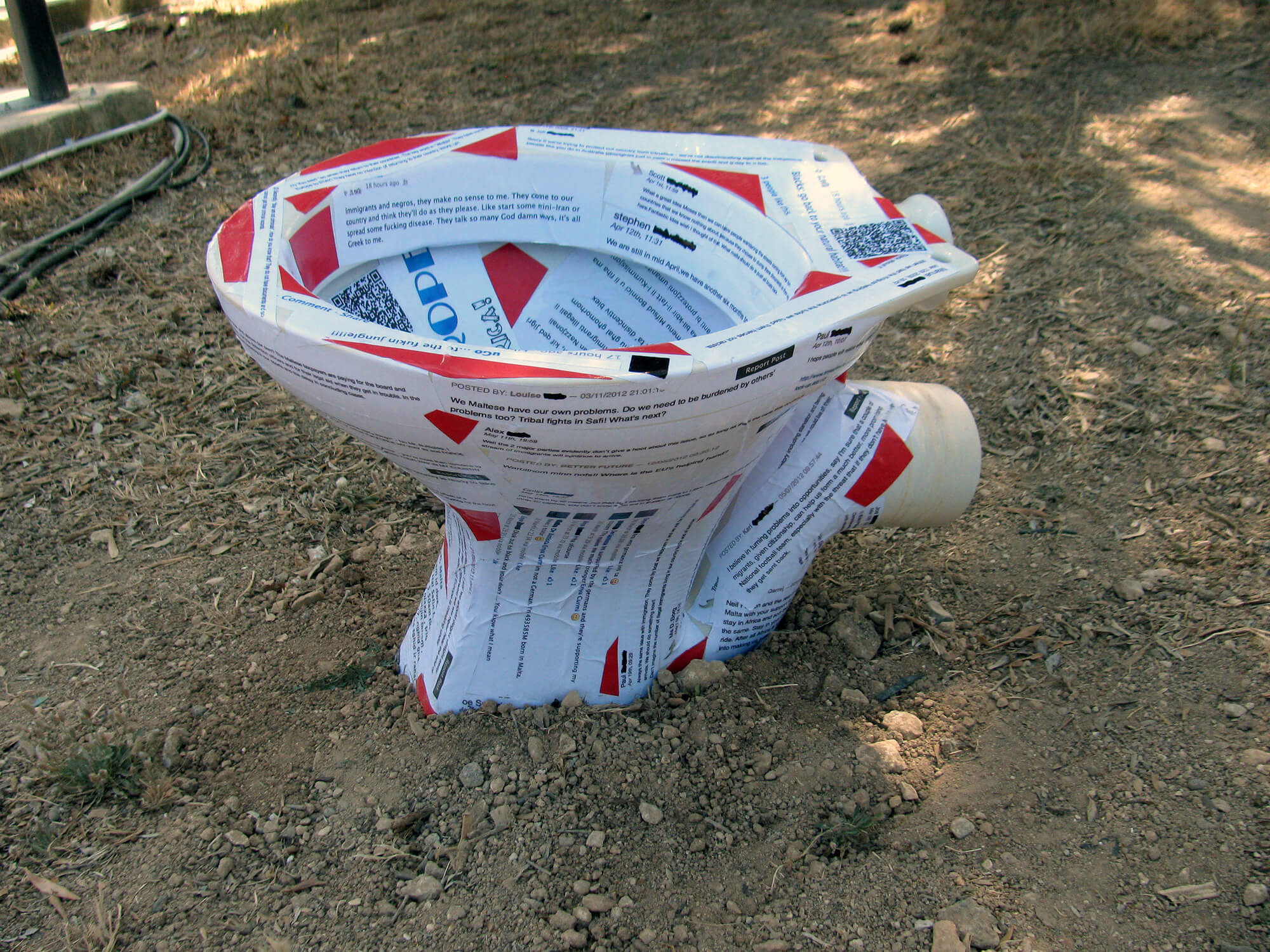
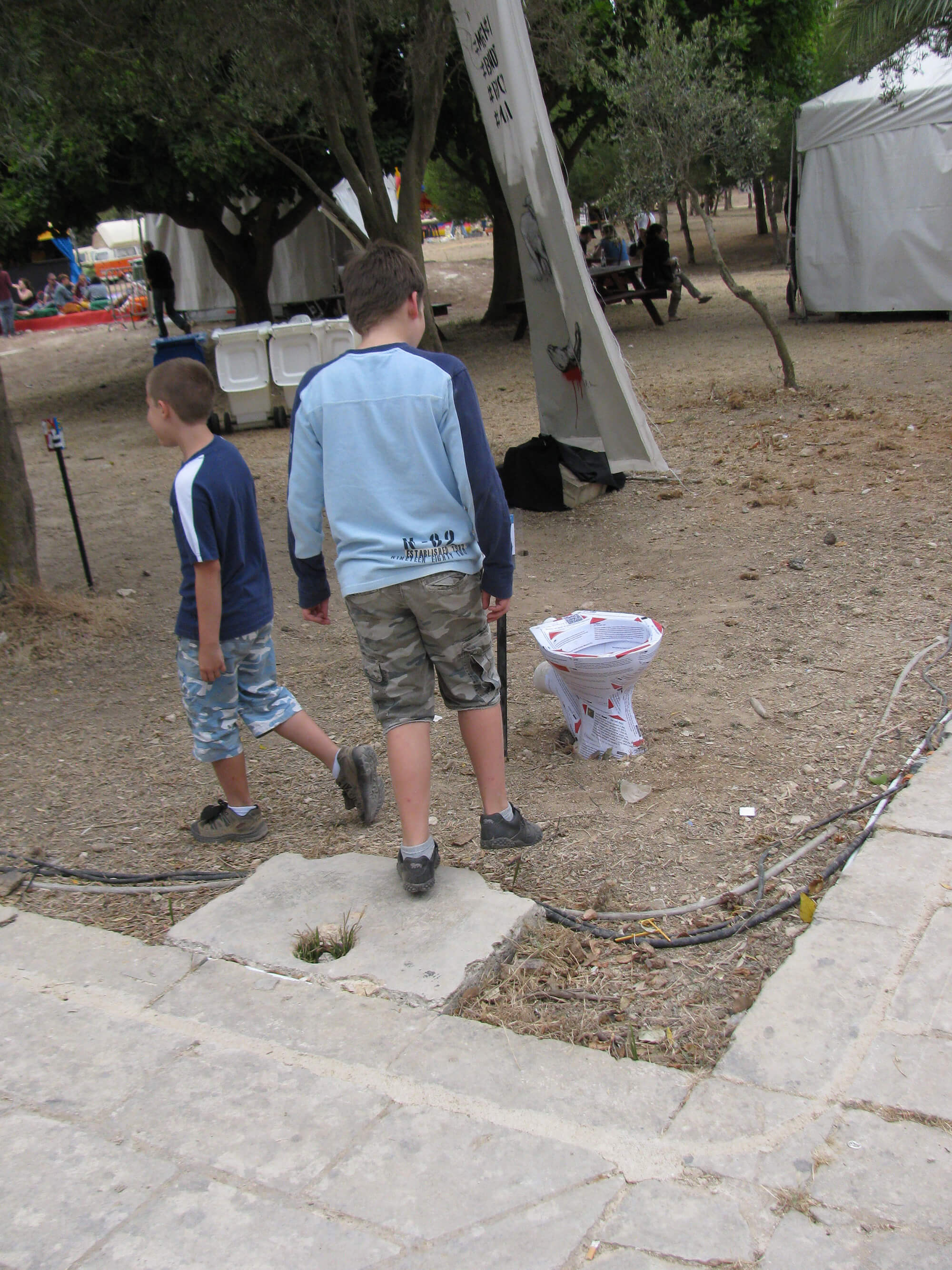
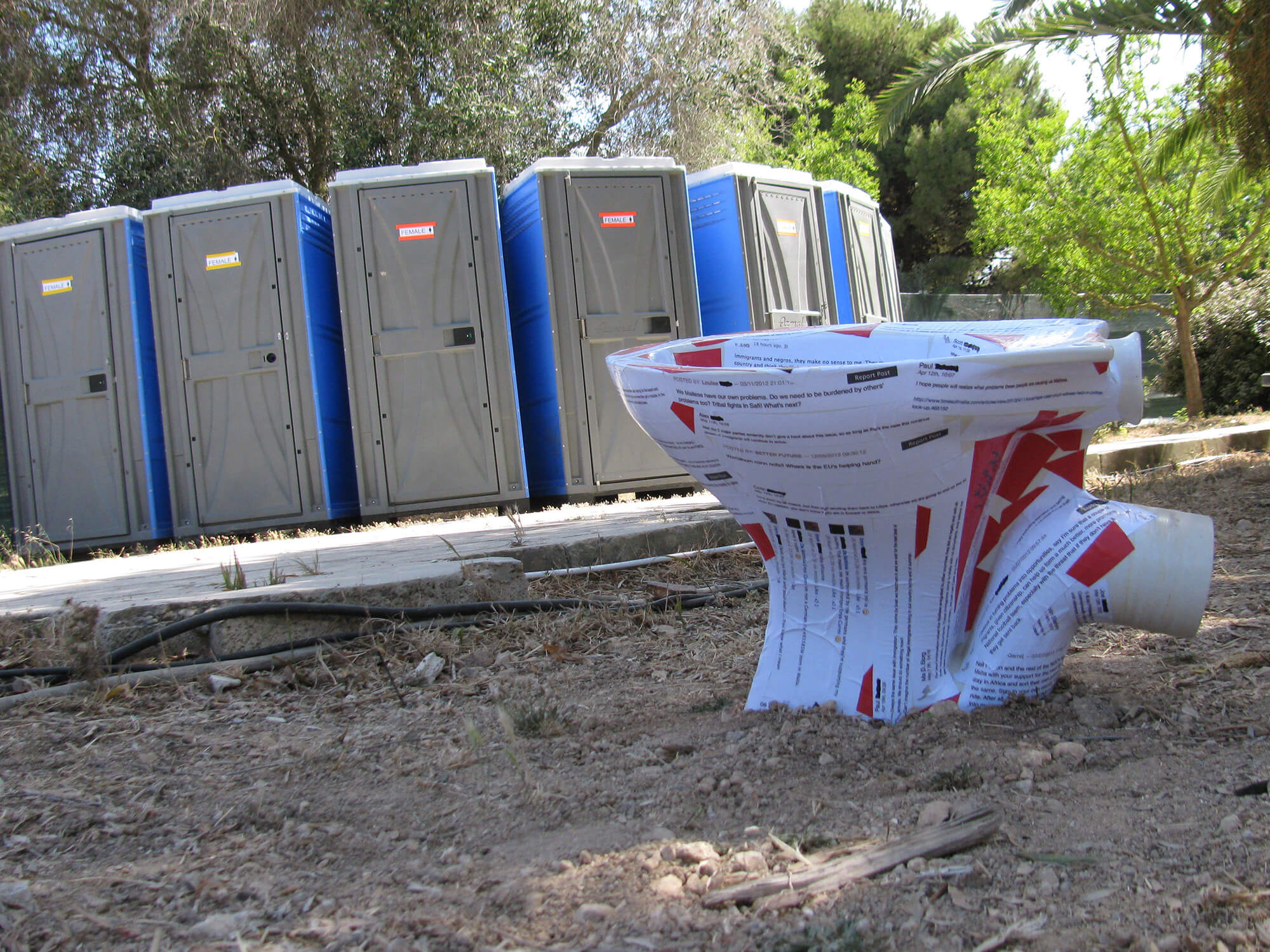
Il-Qasma Soċjali is presented not merely as an object but as a site-specific intervention within a lived social environment. The placement of the ceramic toilet outdoors, visually echoed by the row of portable chemical toilets in the background, establishes a deliberate correspondence between sanitation infrastructure and social regulation. This juxtaposition collapses distinctions between systems designed to manage physical waste and those that implicitly manage social “undesirables”, suggesting that xenophobic discourse itself operates as a form of refuse: produced collectively, normalised through repetition, and quietly displaced from ethical scrutiny.
The toilet’s surface, wrapped in printed comments sourced from Facebook, functions simultaneously as archive and indictment. Removed from their original digital context and re-materialised as sculptural skin, these fragments of online speech convert ephemeral hostility into durable form. In this translation from screen to object, the work exposes how casual expressions of racism and exclusion, typically dispersed and anonymised within networked environments, coalesce into a legible ideological mass when physically assembled. The toilet thus becomes a vessel not for bodily waste, but for ideological waste: a container for sentiments deemed unfit for public moral space, yet paradoxically generated within it.
The work’s dialogue with Marcel Duchamp is articulated through both homage and inversion. Where Duchamp displaced an industrial urinal into the gallery to destabilise aesthetic hierarchies, Il-Qasma Soċjali relocates the readymade gesture into the civic sphere, re-inscribing it with political urgency. Authorship under the pseudonym “ARMAT” further intensifies this gesture. While its phonetic echo of “R. Mutt” situates the work within a lineage of institutional critique, the Maltese meaning of “equipped” or “armed” implies that language itself has become weaponised within contemporary discourse.
The double entendre embedded in the title deepens this strategy. While translating as The Social Divide, it simultaneously invokes a vulgar Maltese term associated with bowel incontinence. In aligning political fracture with bodily dysfunction, the work collapses abstract debate into visceral corporeality. Immigration anxiety is reframed not as a rational policy dispute but as an involuntary expulsion—an abject reaction rooted in fear and disgust. This metaphor implicates the body politic itself: the inability to “contain” difference becomes symptomatic of a society that has lost ethical continence.
Collective authorship under the name Nagħaġ (Sheep) introduces a further layer of reflexivity. The self-designation evokes herd mentality and uncritical repetition, implicating both the producers and the public within systems of conformity and complicity. Presented within the context of the Earth Garden Festival, a space associated with communal values and ecological awareness, the work acquires an additional tension between ideals of harmony and the latent aggression embedded in popular discourse.
Ultimately, Il-Qasma Soċjali operates as a sculptural condensation of digital xenophobia. By transforming disembodied text into abject form and situating the readymade within a specific Maltese socio-political context, the work renders invisible attitudes materially present. Its critical force lies less in provocation than in translation: exposing how exclusionary ideologies circulate as both waste and weapon within contemporary civic life.
Il-Qasma Soċjali was part of a collective artistic effort by Darren Tanti, Chris Castillo, Keith Bonnici, and Pawlu Mizzi, under the pseudonym Nagħaġ (Sheep), for the 2013 Earth Garden Festival.