Note: This article was published as an edited opinion piece on Times of Malta.
Having been raised in Valletta, I always longed to work at Allied Newspapers. As a boy I would look up at the white block beside Castille and imagine myself inside it one day. After formative years as an apprentice graphic designer at Scancraft Studios and short spells at BMS Ltd., the Acquis Communautaire Translations Unit and Peak Ogilvy, that dream finally came true. I had originally intended to join Mediamaker but, for some reason, the opportunity at Allied Newspapers presented itself instead. And thank God it did.
Working and living in Valletta was a happy, intense chapter of my life. Allied Newspapers became part of a formative phase that shaped me professionally and introduced me to colleagues who remain friends to this day.
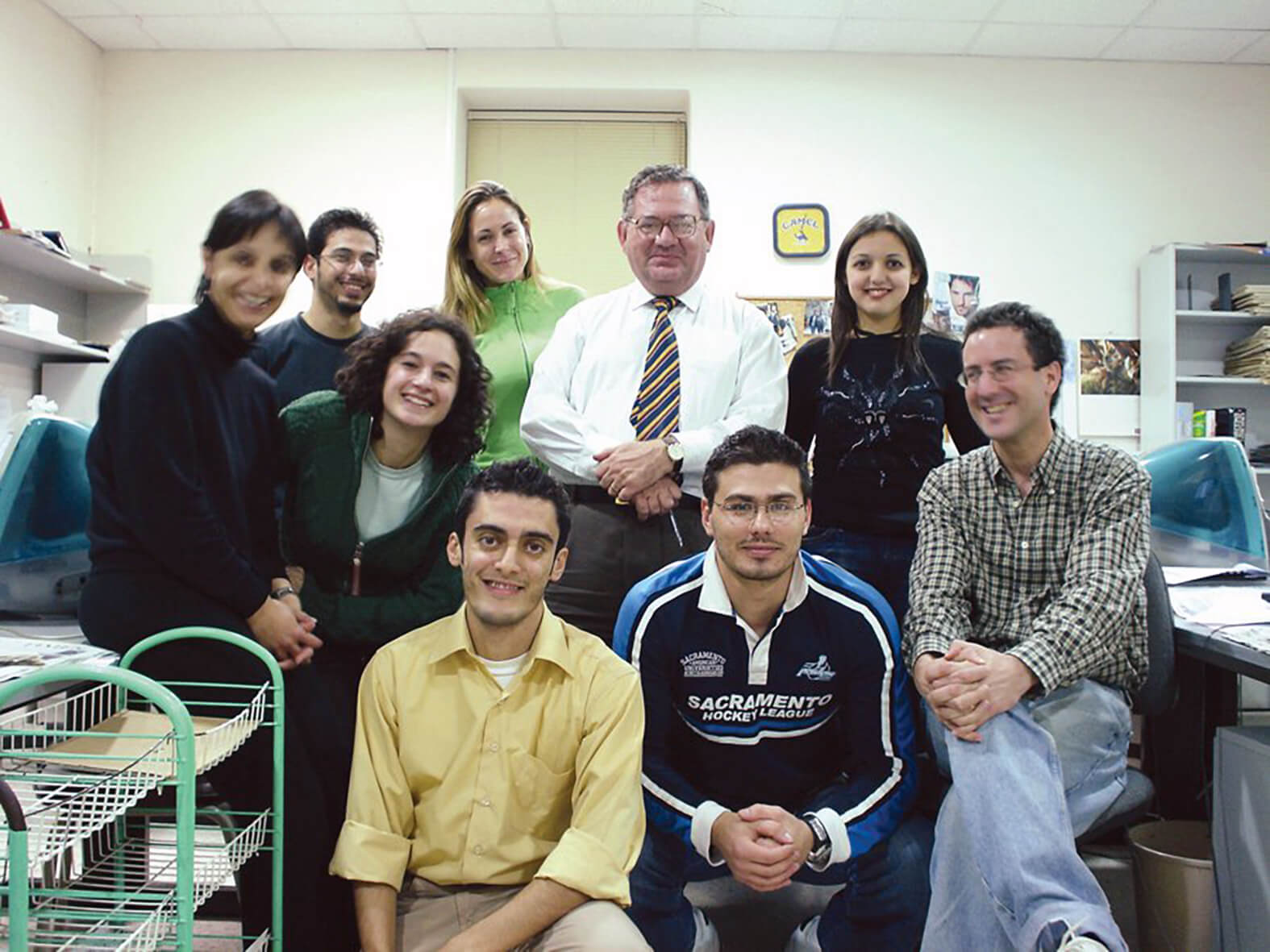
During my two spells there between 2004 and 2014, I encountered Laurence Grech often. To all of us, he was simply Laurence. No titles. No distance. Just a steady, dignified presence, usually advancing at a brisk, unmistakable pace, his footsteps announcing him before he appeared. He carried the newsroom’s memory and its conscience with a smile.
What set Laurence apart was his instinctive understanding of a newspaper’s public duty in a pre social media world. He was determined that no relevant story be overlooked, and he championed cultural initiatives with particular conviction. That sometimes meant pages fuller than designers preferred. We grumbled about crowded layouts, but Laurence saw the larger picture. The paper was a lifeline, a gatekeeper, a public square where voices could be heard. He accepted that responsibility with humility and with resolve.
I remember one night in particular, the Saturday evening when news broke that Pope John Paul II had passed away. The newsroom atmosphere shifted instantly. It was not merely another international story; it was a moment that would mark history. Laurence handled the situation with remarkable composure. Pages were reworked, priorities reassessed, deadlines stretched to their limits, yet somehow, through his steady direction, the Sunday edition was reorganised so that readers would wake to the news properly carried and contextualised in The Sunday Times of Malta. It was masterful crisis management, but more than that, it was a demonstration of what he believed a newspaper owed its readers.
He treated colleagues as equals, regardless of age or rank. To younger staff he was unfailingly respectful, guiding without patronising and correcting without diminishing. He fostered an atmosphere in which everyone felt valued; men and women, senior staff and newcomers alike. It was never performative; it was simply who he was, a gentleman in the truest sense.
Small gestures revealed his character as clearly as his editorial decisions. He would bring seasonal treats to the office. I can still picture the figolla he once shared, softening the edges of deadlines and late Saturday nights. When he was not at his desk in his tiny office, he would pass by our desks and pause to talk about music, exhibitions, politics or whatever creative obsession occupied us at the time. His curiosity was genuine. He cared because he believed such things mattered.
His meticulousness was legendary among page setters. Laurence could detect a missing comma from across the room. His corrections were precise and consistent, never pedantic, always rooted in respect for the reader, for the craft and for the truth. His search for the right word and the most accurate terminology was inspiring in hindsight. At the same time, he was unafraid to be firm when standards slipped. If a contributor fell short, he addressed it directly, always fairly and always with the aim of raising standards rather than lowering spirits. That balance of authority and humanity is rare, and rarer still sustained over decades.
In recent years our exchanges were fewer, but they remained warm. When I invited him to my exhibition Dialogue in Transcendence, his reply was characteristically gracious:
Dear Pawlu, thank you for the invitation. Unfortunately, because of a foot injury I am mostly house bound, so I am afraid I will not be able to attend. However, I sincerely wish you every success with this exhibition — Prosit!
That brief message carried everything I remember about Laurence: courtesy, encouragement, and genuine interest in the work of others.
Laurence helped shape a newsroom culture that some of us still recall as the finest years of their professional lives. He understood that journalism is not merely about information, but about integrity, community and care. He encouraged initiative and gave voice to those who might otherwise have gone unheard.
Just as we mourn the loss of the white building beside Castille, we now mourn Laurence’s passing as a profound loss to his family, to his colleagues and to Maltese journalism. Yet his legacy endures in the standards he set, the people he mentored and the culture he helped build. I consider myself fortunate to have learnt from him through osmosis.
Farewell, Laurence. Today we celebrate you, the dignity you brought to our working days, the clarity you demanded and the kindness you showed to every one of us. In my own small way, I hope to carry a part of that legacy forward.


