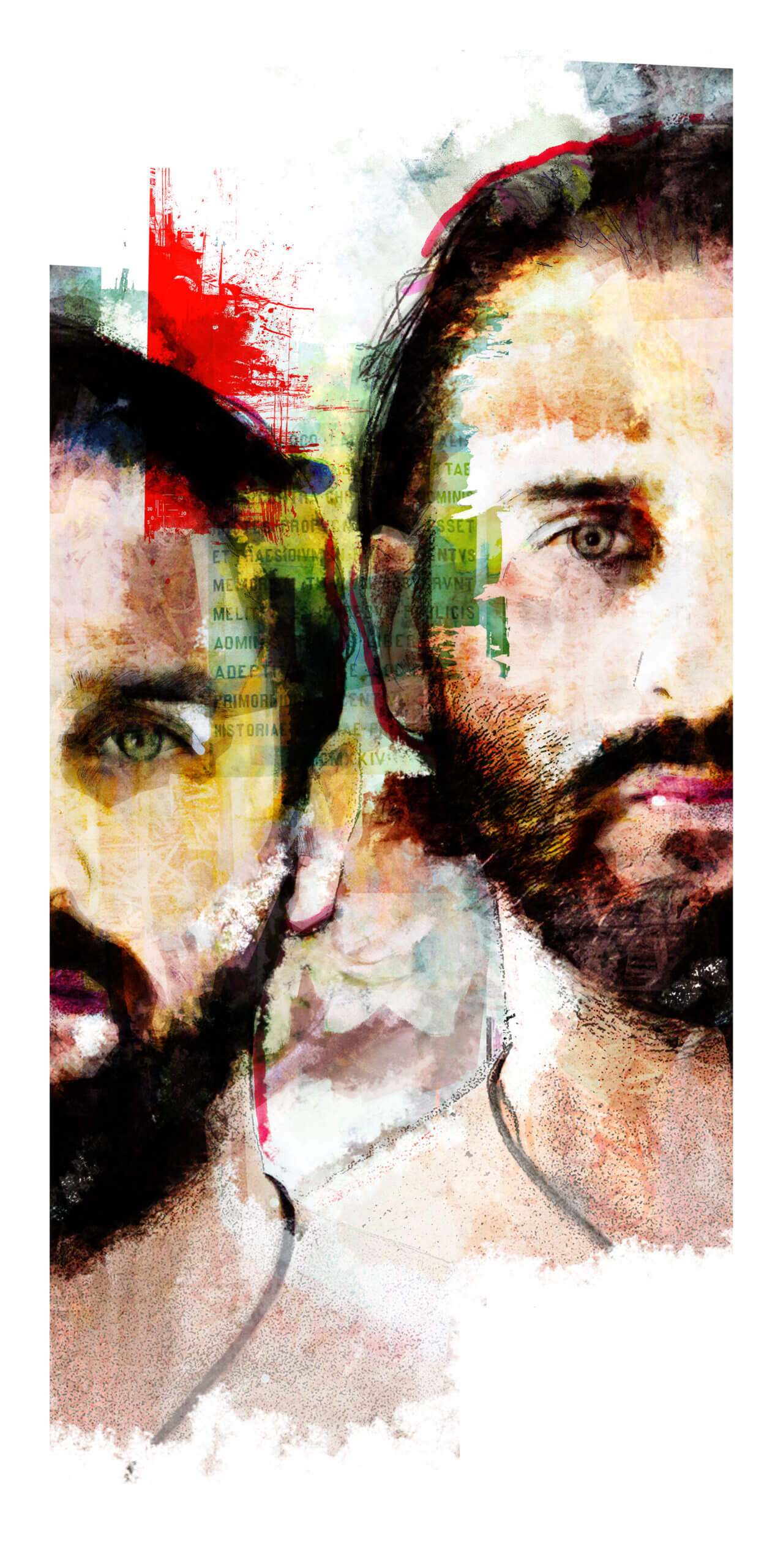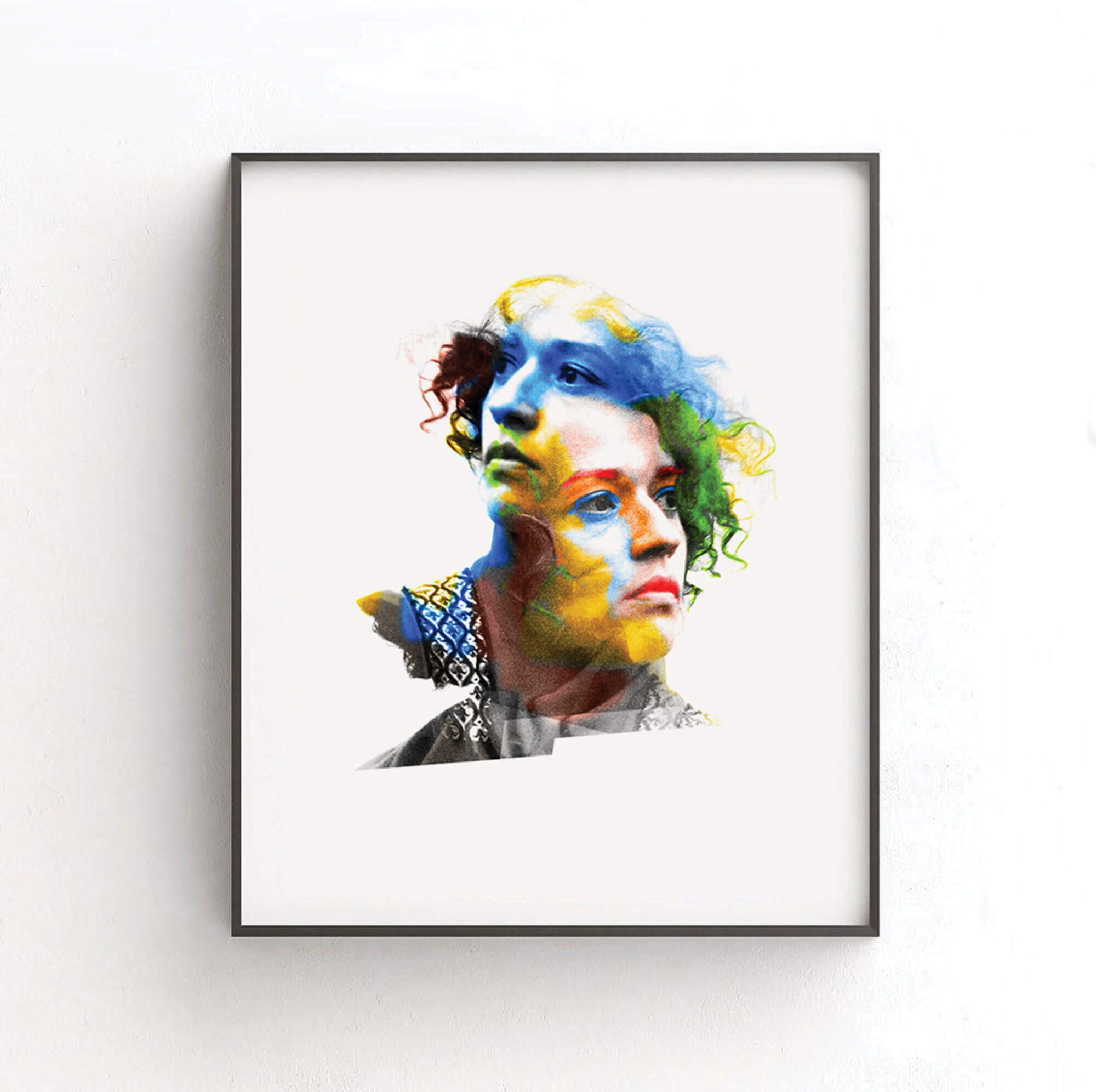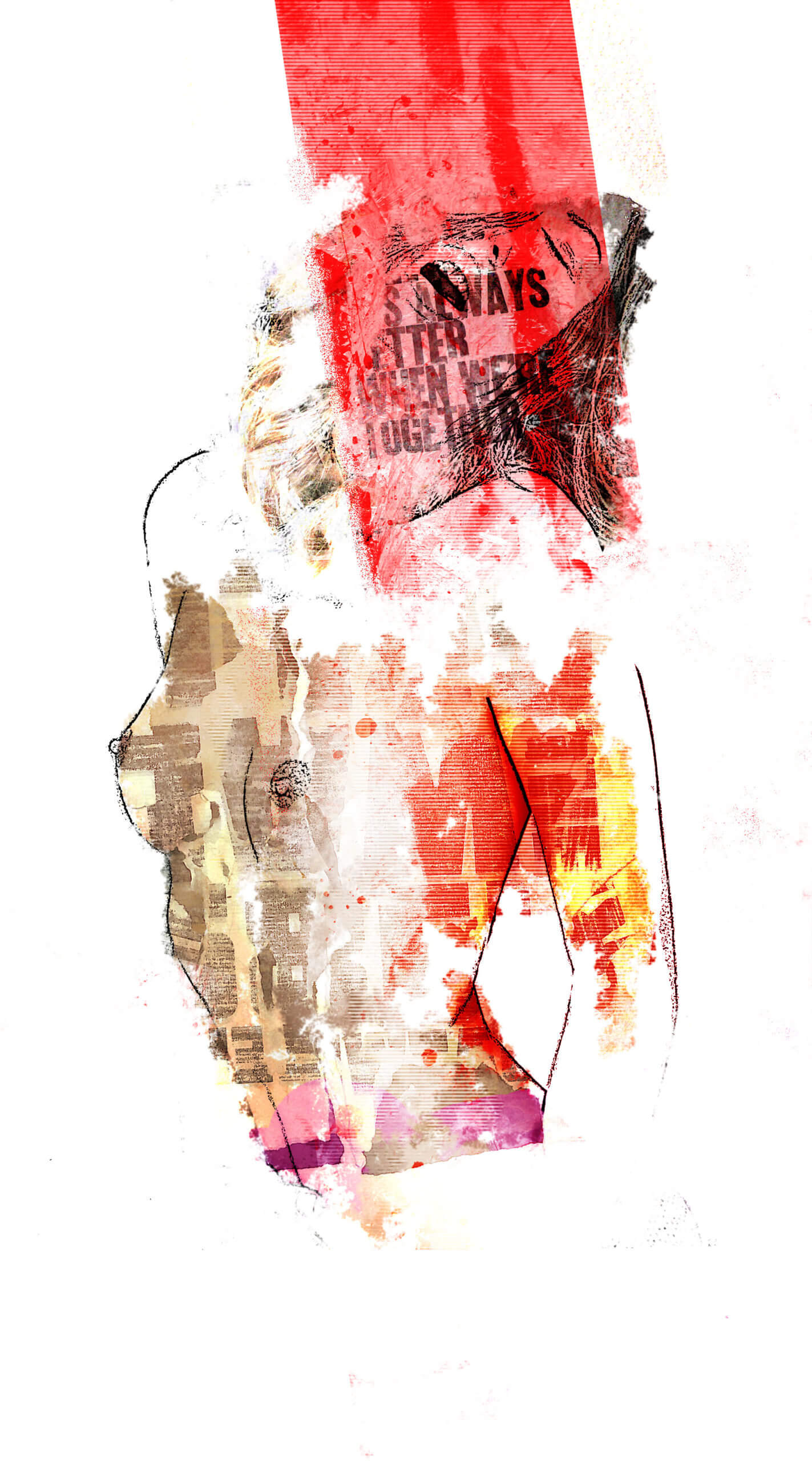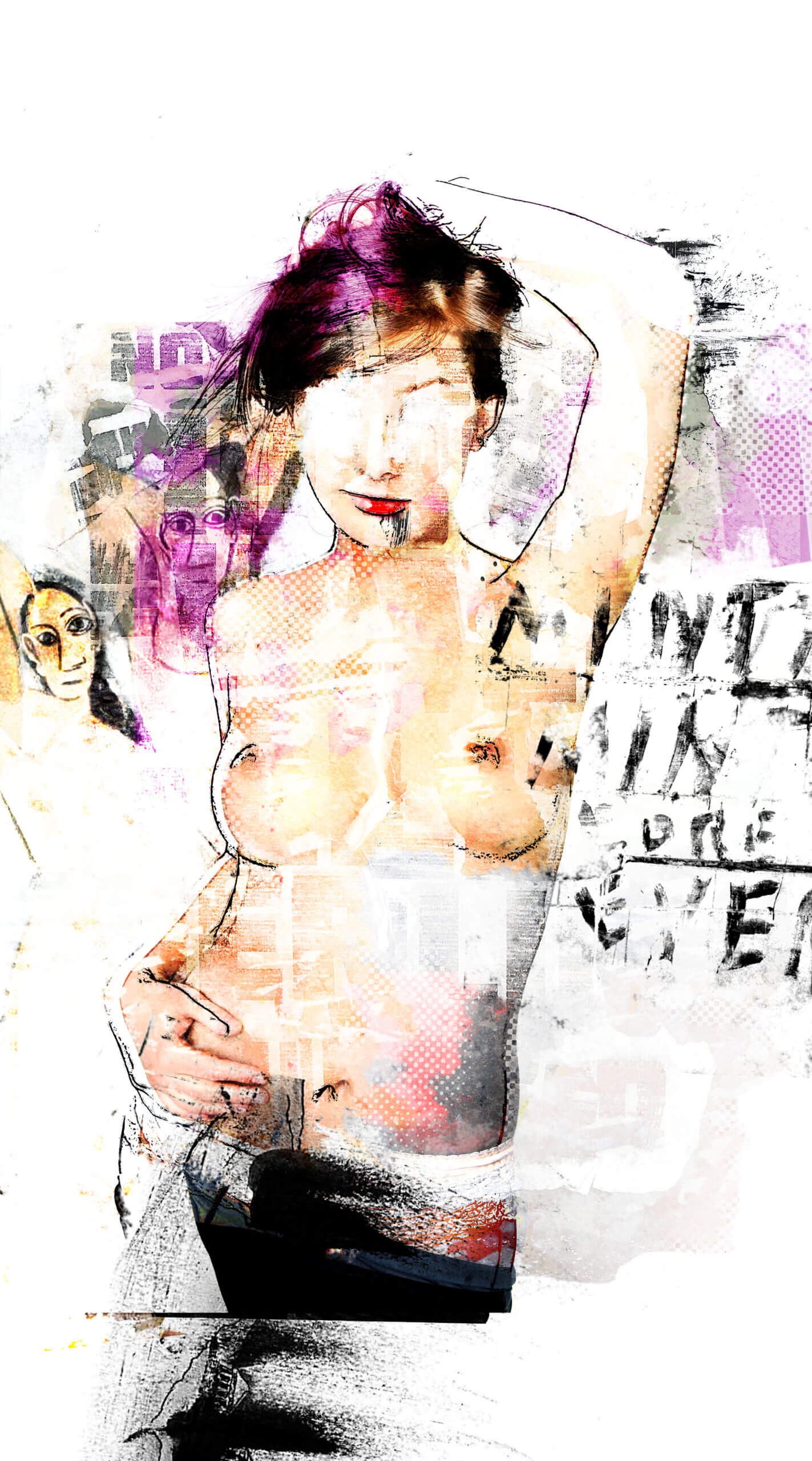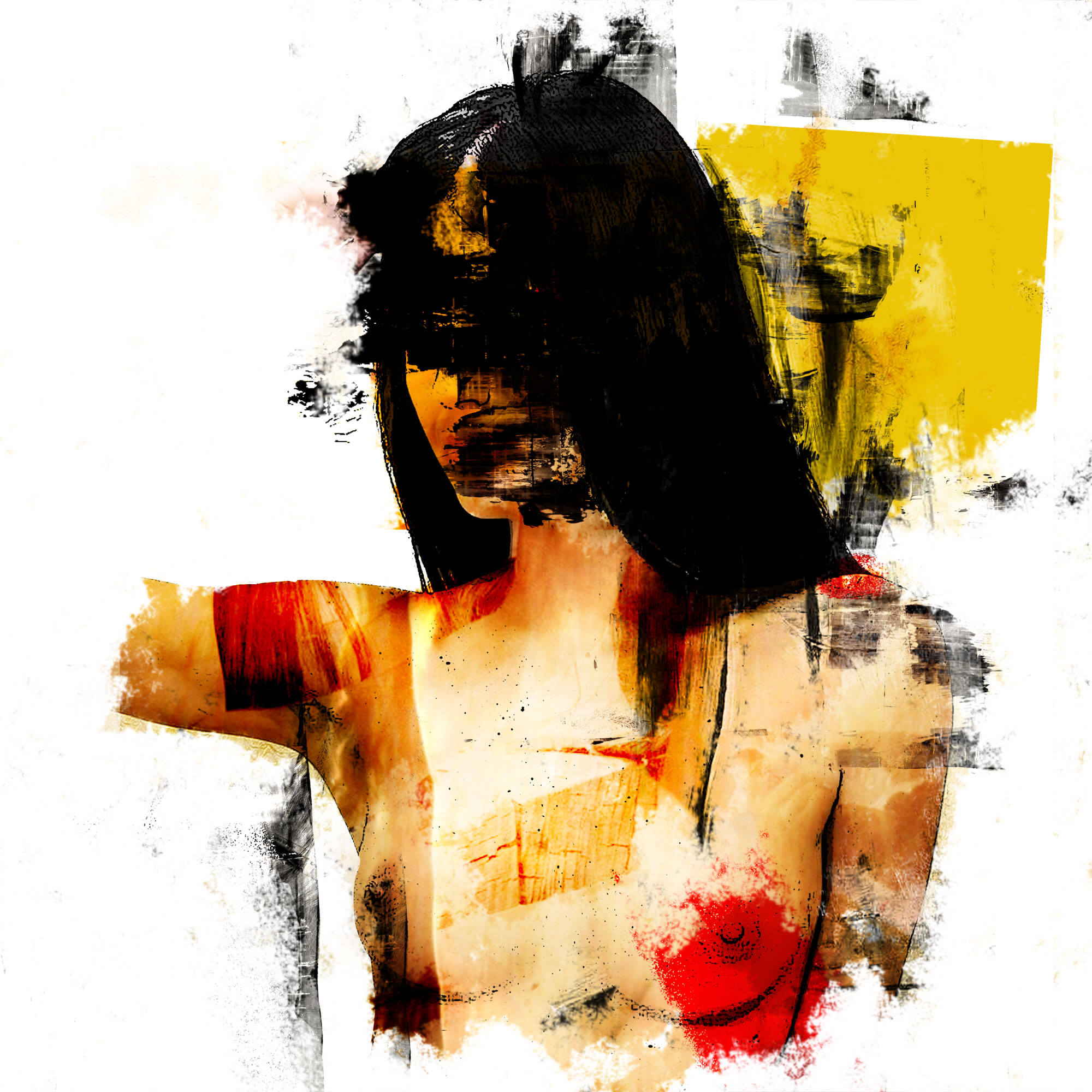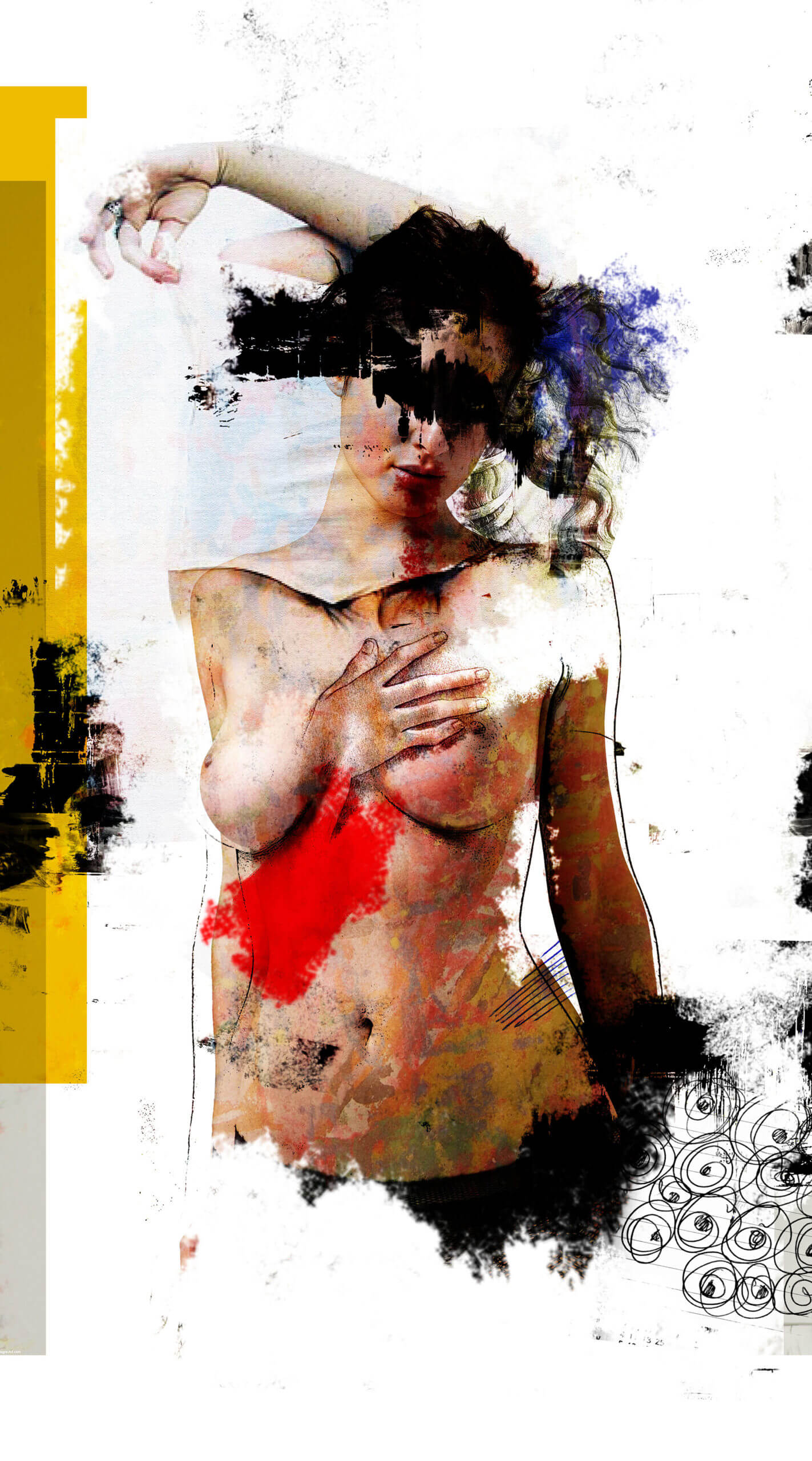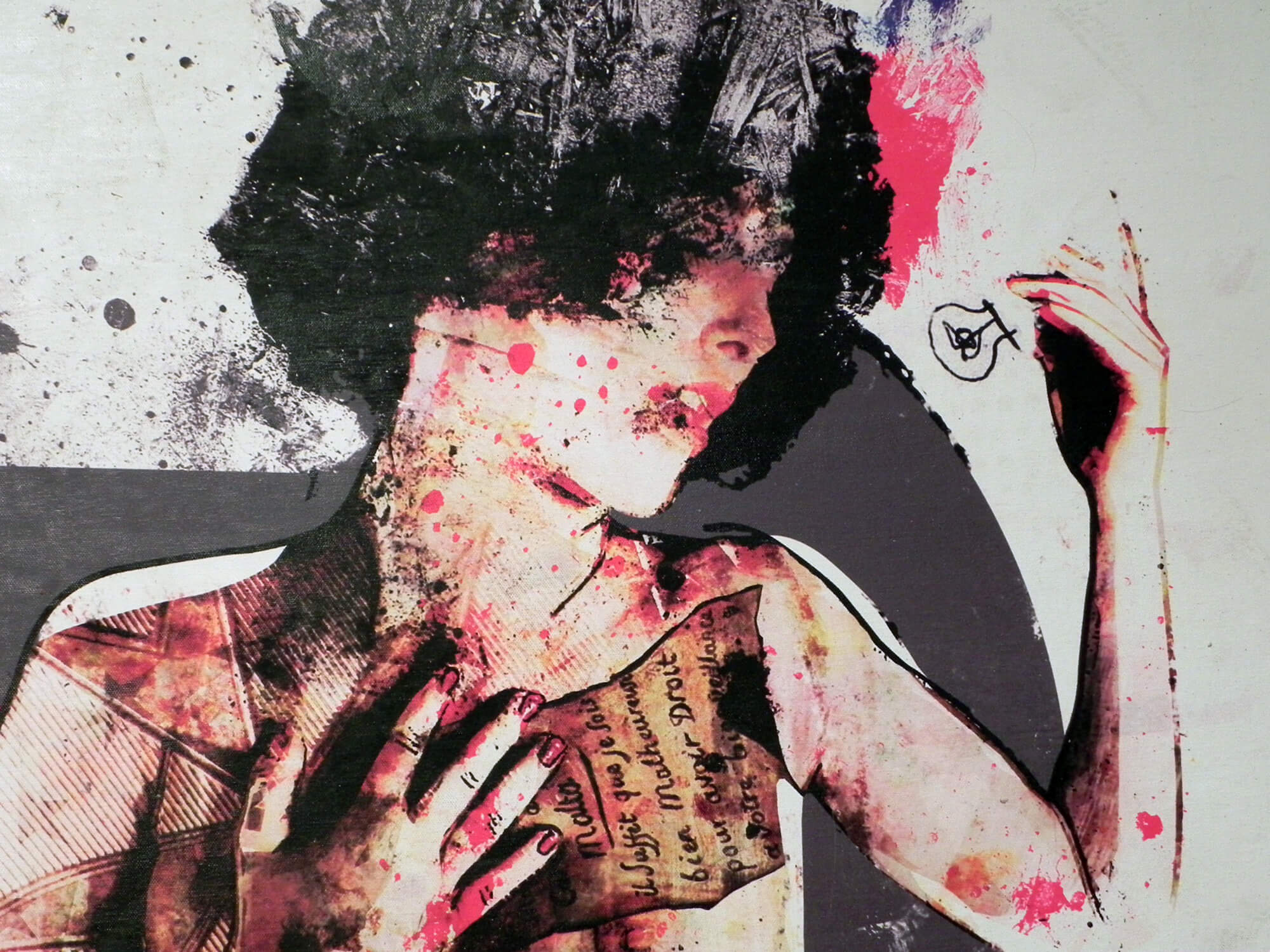
Death of Malta is a digital print on canvas by Pawlu Mizzi that depicts the metaphorical death of Malta through a digital collage. It explores historical and social themes in a unique and thought-provoking manner, drawing inspiration from the notable artworks of Jacques-Louis David’s Death of Marat (1793) and Pablo Picasso’s Guernica (1937).
The central figure in the artwork draws inspiration from sculptor John Bonnici’s Independence monument in Floriana, depicting Malta as a triumphant woman liberating herself from the weight of the past. However, in Death of Malta the central figure is depicted as a dying woman, desperately holding onto life. Her body is stained with blood as she clings to the eight-pointed cross and a handwritten letter pressed against her breasts.
The artwork presents a crime scene where Malta has been presumably murdered, with only an electoral identification document as a clue to the assailant’s identity. This draws inspiration from Death of Marat which depicts the aftermath of Marat’s assassination by Charlotte Corday, with a bloodied knife lying on the floor. Additionally, blue and red brush strokes near the head symbolize the divisive political landscape in Malta, where socialist and nationalist ideologies have brainwashed and alienated the victim.
By incorporating a deceased figure and a treason letter, the artwork explores themes of mortality, betrayal, and the consequences of revolutionary attempts. The altered letter, replacing “Marat” with “Malta,” symbolizes a disruptive element within Malta’s socio-political context. The inclusion of the eight-pointed cross, derived from the design of the Malta Euro Coin, questions the values and virtues cherished by the Maltese population.
Unlike the illuminated portrayal of Jean-Paul Marat in David’s artwork, the deceased Malta is shrouded in darkness, amplifying a sense of mystery and impending tragedy.
Elements from Picasso’s Guernica are also integrated into the artwork, reflecting the chaos of war. The blood splattered on the dying figure in “Death of Malta” echoes the violent imagery of Guernica. The light bulb represents the dying figure’s last act and the loss of enlightenment, signifying looming consequences within Malta’s socio-political circumstances.
Furthermore, the scar on the horse in Guernica, symbolizing suffering and resilience, is depicted as a scar on the female figure’s lower abdomen in “Death of Malta.” This visual metaphor poignantly represents the lasting pain and trauma endured by the Maltese people and the impending catastrophe that will impact future generations.
The artwork is signed-off with the inclusion of a Dominican symbol, which is the cover illustration for Mark Montebello O.P.’s book “Il-fidwa tal-Anarkiżmu” which greatly inspired the artist in the conception of Death of Malta. The Latin phrase “Vigiles Fidei et Verae Mundi Lumina” translates to “Watchmen of the Faith and Lights of the True World” and is associated with the Dominican Order of Preachers, highlighting their unwavering commitment to promoting and defending the Catholic faith. In the context of the artwork, this conclusion takes on a sarcastic tone.
Death of Malta was displayed on the floor of a corridor and framed by a physical collage of newspaper cuttings referencing contemporary political reportage. Similar to the narrative of the Good Samaritan, visitors were presented with the unsettling choice of stepping over the dying figure or walking past it over the surrounding newspaper collage.
(Added 2024) Over the years, Death of Malta has transcended its initial artistic statement, proving to be a disturbingly prophetic vision of the nation’s trajectory. The political polarisation, institutional decay, and the commodification of Malta’s identity have only intensified, echoing the visual and thematic warnings embedded within the artwork. Today, as the country grapples with rampant overdevelopment, environmental degradation, and deepening societal fractures, the dying figure in Death of Malta feels less like a metaphor and more like a mirror reflecting an unsettling reality. The once-symbolic crime scene now eerily parallels the collective erosion of civic values, where democracy is held hostage by the same forces of power and betrayal that the artwork sought to critique.
–
This digital artwork was part of a collective exhibition held between July 9 and August 14, 2012 at St James Cavalier – Centre for Creativity, now Spazju Kreattiv, in Valletta. The collective was titled ‘MIRRORED | Critical Reflections’ and featured works by University of Malta students, namely Ascione Maurizio, Bonnici Keith, Borg David, Calleja Keith, Camillleri Karl, Corrieri Raffaella, Dingli Andrea, Fleri Soler Ella, Galea Stephanie, Grech Jacob, Mizzi Pawlu, Muscat Zach, Tonna Nicholas and Xuereb Steve. This student collective was under the supervision and tuition of Dr. John Grech at The University of Malta.
The Media
Going back to the masters – Review for Times of Malta by Charlene Vella