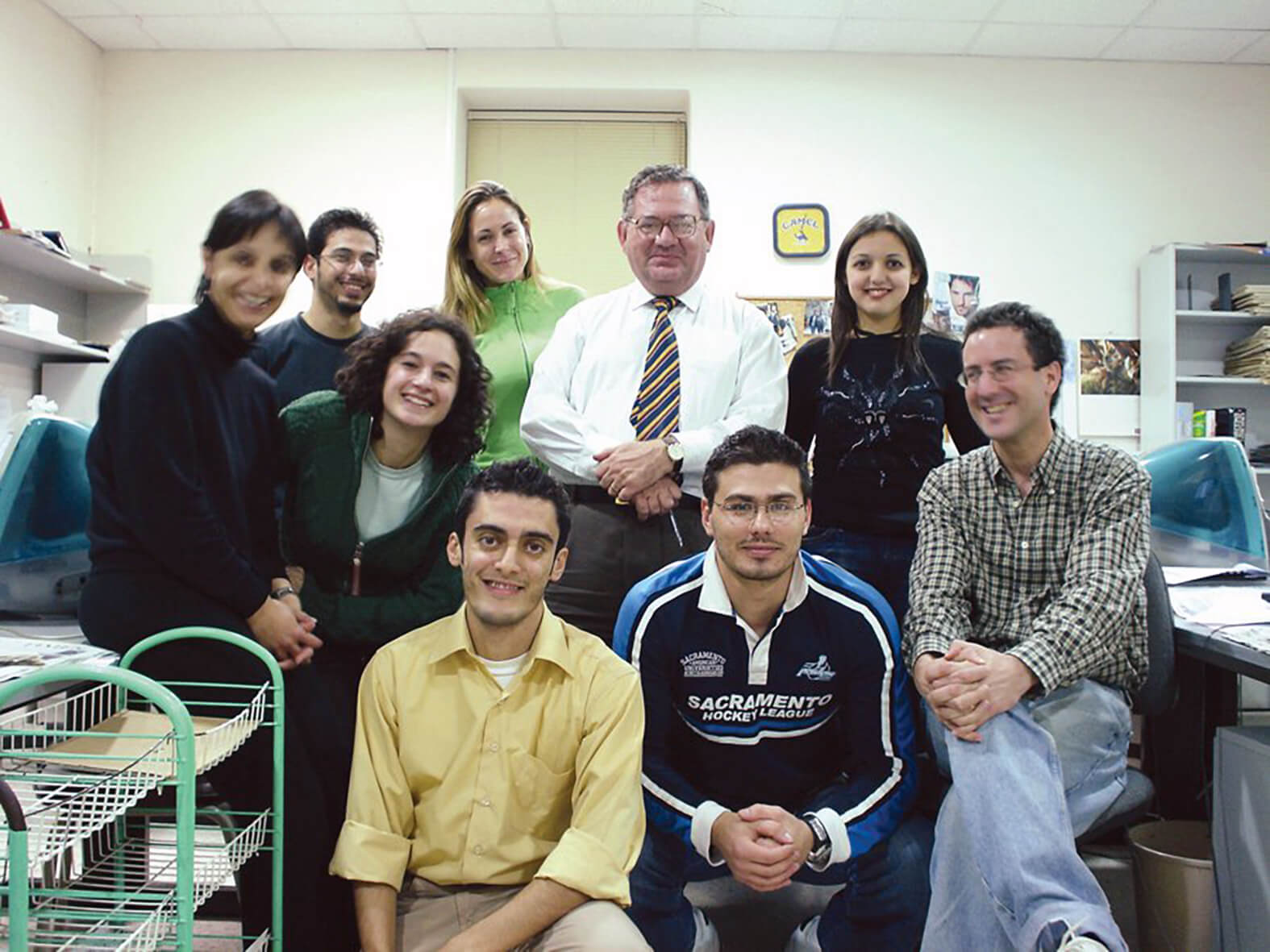
Category: Tberfil

More Content, No Journalism

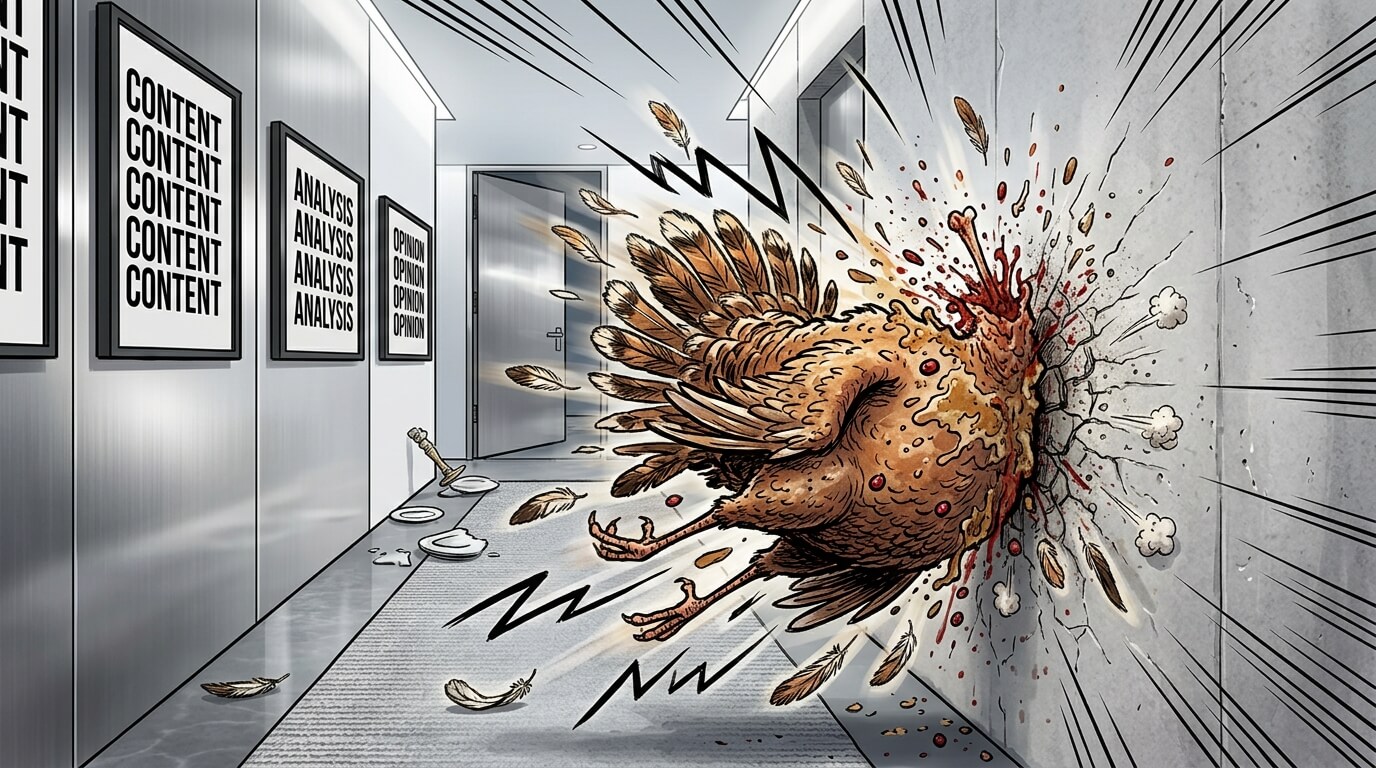
If I were to search for a metaphor to depict the state of public discourse in Malta today, I would easily draw upon the image of a poor turkey running headlong down my grandmother’s hallway while its severed head rests in the kitchen sink.

We’ve really lost our heads. Partisan media outlets relentlessly hammering party dogma exist side by side with various vloggers and digital personalities lauded not only by the mindless followers but by public institutions themselves. A saturation of unqualified content that is contributing to the creation of a society averse to critical thought and obsessed with instant gratification.

I cannot help but notice that the general public is largely composed of people who would rather live as perpetual clowns wearing an endless grin than as discerning minds. I have long wondered what kind of journalists our education system is producing. Today, the reality is that even academic institutions prefer to drape a gown over mediocrity.

To grasp the depth to which the Maltese media landscape has sunk, one must first recognise that not all media output carries the same intrinsic value or nature. Setting aside niche-specific contexts, the fundamental mechanics of media work can be divided into four distinct editorial roles. Roles that average Maltese commentators and, I gravely fear, educational institutions, frequently conflate:

  • Content Creation: The act of recycling, aggregating, or repackaging information that is already in the public domain. Its primary aim is to drive engagement, feed algorithms, and maintain the market visibility of commercial or personal brands. Maltese partisan media churns out vast amounts of this content simply to frame reality from whichever angle suits its interests.
  • Analysis: Interpreting known facts, connecting the dots, and providing context for current affairs. Analysis gives structure to existing information, but in and of itself produces no new facts. Regrettably, this form of output has dwindled significantly largely due to pervasive digital distractions and a collective apathy towards rigorous observation.
  • Opinion: The expression of a personal perspective or commentary on a given subject. It is a purely subjective exercise requiring no primary research. Opinion often serves merely to provoke emotional reactions or offer a fleeting hot take. This format has spread uncontrollably, breeding commentators who claim to know everything while suffocating substantive discourse.
  • Journalism: The active, rigorous process of uncovering new, unverified, or concealed facts through investigation, primary sources, and documentary evidence. Journalism demands thorough verification, offers all parties the right of reply, and publishes material that holds power accountable regardless of the impact on access or personal consequences. Tragically, genuine journalism is increasingly rare in Malta, suppressed by a culture of aggression and impunity in which the powerful can threaten, blackmail, or even kill to prevent uncomfortable truths from coming to light.

When judged against these criteria, the vast majority of what passes for “journalism” in Malta quickly reveals itself to be nothing more than a mixture of the first three categories. Our local media environment suffers from acute self-referentiality. We have created a mediocre ecosystem in which commentators and vloggers interview only those who echo their own agendas, while politicians carefully select platforms that offer comfortable access while dodging adversarial scrutiny. Everyone knows everyone, everyone interviews everyone, and everyone quotes everyone. The result is a closed loop that echoes the same superficial information across different formats.

This failure is further exacerbated when journalism is conflated with personal branding. When a media personality builds a platform around their personal brand, audience loyalty shifts to the creator rather than the veracity of the reporting. Credibility in journalism cannot be built on charisma or popularity. A story should not be trusted because of who is telling it, but because it has been independently verified, grounded in reliable sources, and subjected to rigorous cross-examination against documentary evidence.

Furthermore, the currency of access has corrupted local reporting. A genuinely independent journalist cultivates contacts within government, state institutions, and corporations not as an end in itself, but as a tool to uncover the truth. The existential test of a journalist lies in their willingness to sacrifice that access to publish a story that powerful entities would prefer to keep hidden. In Malta, access is far too often guarded like a trophy. When access demands self-censorship, media figures cease to be journalists and become unaccredited public relations officers.

Journalism is neither an act of favour nor an act of hostility. A journalist’s duty is not to “think of the good” of a political party, commercial enterprise, or public body. Their role is neither to be a friend nor an enemy to power, but an objective investigator of facts. Consequently, a true journalist can never operate as an agent for one political party or another.

A simple metric for evaluating media output in Malta over any given month is to ask: “What new, verified information has this platform uncovered that was not already available elsewhere?” Regrettably, the answer is usually obvious. A media figure can have tens of thousands of followers, stream ten mundane videos a day, interview prominent figures, and sit in the front row of press conferences. Yet if all they do is publish mediocrity and repeat what is already known, they are merely engaged in content creation. If they simply interpret the news, they are conducting analysis. If they merely express what they think, they are offering an opinion.

Journalism occurs only when something previously unknown is uncovered, documented with evidence, tested against counter-arguments, and presented to the public regardless of the discomfort or inconvenience it causes to those in power.


Kontenut iva, Ġurnaliżmu le

Li kelli nsib metafora sabiex biha nirrappreżenta l-pajsaġġ tad-diskors pubbliku f’Malta llum, faċilment nasal insemmi lill-imsejken dundjan jiġri kemm jiflaħ tul il-kuritur tad-dar tan-nanna, waqt li rasu tinstab mimduda fis-sink tal-kċina.

Tlifna rasna bid-djar tal-media partiġġjani li kontinwament itambru l-kredu tal-partit sa vloggers u personalitajiet diġitali osannati mill-flieles ta’ Ġaħan iżda anki mill-entitajiet pubbliċi. Saturazjoni ta’ kontenut medjokri li qed joħloq soċjetà li ma tridx taħseb u li trid l-istantanjetà. Soċjetà magħmula minn persuni li jippreferi jgħixu ta’ pulċinell perennement jiddieħak milli mħuħ kritiċi li jaħsbu, jistaqsu u jixtarru. Minn dejjem staqsejt x’ġurnalisti qed jipproduċi s-settur edukattiv. Illum ir-realtà hija li anki l-entitajiet edukattivi jippreferu jlibbsu toga fuq il-medjokrità.

Biex wieħed jifhem il-qiegħ li mess l-ambjent medjatiku lokali, jeħtieġ l-ewwel nett li jifhem li mhux kull produzzjoni medjatika għandha l-istess valur jew natura. Lil hinn mill-kuntesti speċifiċi ta’ niċċa, il-mekkanika fundamentali tax-xogħol medjatiku tista’ tinqasam f’erba’ rwoli editorjali distinti. Rwoli li fil-kummentarju tal-Malti medju, u wisq nibża’ anki f’dak edukattiv, spiss jiġu konfużi u mħallta flimkien bħallikieku huma l-istess ħaġa:

  • Il-Ħolqien tal-Kontenut: Dan huwa l-att ta’ riċiklaġġ, ġbir jew formulazzjoni mill-ġdid ta’ informazzjoni li diġà hija disponibbli pubblikament. L-għan primarju tiegħu huwa li jingaġġa parteċipazzjoni, jgħalef l-algoritmi, u jżomm ħajja l-preżenza ta’ marki kummerċjali jew personali fis-suq u fis-soċjetà. Il-midja partiġġjana Maltija tiġġenera ħafna minn dan sabiex turi l-verità mill-perspettiva li jaqbel lilha.
  • L-Analiżi: Din tinvolvi l-interpretazzjoni ta’ fatti diġà magħrufa, il-konnessjoni bejn il-punti, u l-proposta ta’ kuntest dwar l-affarijiet kurrenti. L-analiżi tagħti struttura lill-informazzjoni eżistenti, iżda fiha nnifisha ma tipproduċi l-ebda fatt ġdid. Sfortunatament, dan it-tip ta’ kontenut naqas ġmielu. Anki frott l-aljenazzjoni li ngħixu fiha u l-apatija kollettiva quddiem kull forma ta’ osservazzjoni.
  • L-Opinjoni: Din hija l-espressjoni ta’ perspettiva personali jew kummentarju dwar suġġett jew tema partikolari. Hija eżerċizzju suġġettiv, li ma jitlob l-ebda riċerka primarja. L-Opinjoni spiss isservi biss biex tqajjem reazzjonijiet emozzjonali jew tipprovdi kummentarju tal-mument. Dan il-format kulma jmur qiegħed dejjem jinfirex, jwelled monstri li mingħalihom jafu kollox u joħnoq inizzjattivi ta’ natura differenti.
  • Il-Ġurnaliżmu: Il-proċess attiv u rigoruż li jikxef fatti ġodda, mhux verifikati jew moħbija, permezz ta’ investigazzjoni, sorsi primarji u evidenza dokumentata. Il-ġurnaliżmu jitlob li dawn il-fatti jiġu verifikati bir-reqqa, joffri d-dritt għar-risposta lill-partijiet kollha, u jippubblika materjal li jżomm il-poter responsabbli irrispettivament mill-implikazzjonijiet li jista’ jkollhom fuq l-faċilitajiet tal-aċċess u konsegwenzi personali. Sfortunatament dan it-tip ta’ kontenut qiegħed jonqos, speċjalment frott il-kultura ta’ aggressività u impunità li ngħixu fiha. Kultura fejn jekk inti potenti, kapaċi thedded, tirrikatta jew saħansitra toqtol, sabiex tikkontrolla kull forma ta’ tentattiv li tkun magħrufa verità maħmuġa.

Meta mqabbel ma’ dawn id-definizzjonijiet, il-parti l-kbira ta’ dak li jgħaddi bħala “ġurnaliżmu” f’Malta malajr jidher li m’hu xejn ħlief taħlita tal-ewwel tliet rwoli. L-ambjent medjatiku lokali tagħna jbati minn awtoreferenzjalità akuta. Ħloqna ekosistema medjokri fejn il-kummentaturi u l-vloggers jintervistaw biss lil dawk li jirresonaw mal-aġenda tagħhom, u l-politiċi jagħżlu b’attenzjoni kull opportunità li tfornilhom aċċess komdu filwaqt li jevitaw kull skrutinju avvers. Kulħadd jaf lil kulħadd, kulħadd jintervista lill-kulħadd, u kulħadd jikkwota lill-kulħadd. Ir-riżultat huwa katina magħluqa li xxandar u ddamdam l-istess informazzjoni superficjali minn format għal ieħor.

Dan il-falliment huwa mżewwaq iktar hekk kif il-ġurnaliżmu jiġi mħallat mal-personal branding. Meta personalità medjatika tibni pjattaforma madwar il-figura individwali tagħha, il-lealtà tal-udjenza ssir marbuta mal-ħallieq tal-kontenut aktar milli mal-verità tal-kontenut innifsu. Iżda l-kredibbiltà fil-ġurnaliżmu ma tistax tinbena fuq il-kariżma jew il-popolarità. Wieħed m’għandux jafda storja minħabba min qed jgħidha, iżda minħabba li tkun ġiet verifikata b’mod indipendenti, ibbażata fuq sorsi sodi, u eżaminata bir-reqqa ma’ evidenza dokumentata.

Barra minn hekk, il-munita tal-aċċess ikkorrompiet ir-rappurtaġġ lokali. Ġurnalist tassew indipendenti jibni aċċess permezz ta’ kuntatti ġewwa l-gvern, istituzzjonijiet, u korporazzjonijiet, mhux bħala għan fih innifsu, iżda bħala strument biex jikxef il-verità. It-test eżistenzjali ta’ ġurnalist jinsab fir-rieda tiegħu li jissagrifika dak l-aċċess sabiex jippubblika storja li l-entitajiet potenti ma jixtiequx li toħroġ fil-pubbliku. F’Malta, l-aċċess huwa spiss trattat bħala trofew li għandu jiġi protett. Meta l-aċċess iwassal għall-awtoċensura, il-figuri medjatiċi jieqfu milli jkunu ġurnalisti u jsiru uffiċjali tar-relazzjonijiet pubbliċi mhux akkreditati.

Il-ġurnaliżmu m’huwiex att ta’ favur u lanqas att ta’ ostilità. Id-dmir ta’ ġurnalist m’huwiex li “jaħseb fil-ġid” ta’ partit politiku, entità kummerċjali, jew istituzzjoni pubblika. Ir-rwol tiegħu m’huwiex li jkun la ħabib u lanqas għadu tal-poter, iżda investigatur oġġettiv tal-fatti. Għalhekk il-ġurnalist ma jista’ qatt ikun dak li jaħdem għal partit jew ieħor.

Metrika sempliċi għall-produzzjoni medjatika f’Malta fuq xahar partikolari hija dik li nsaqsu: “Liema informazzjoni ġdida u verifikata pproduċiet din il-pjattaforma ta’ komunikazzjoni li ma kinitx diġà disponibbli band’oħra?” Sfortunatament, ir-realtà nafuha. Kull min imiss ma dan is-settur jista’ jkollu għexieren ta’ eluf ta’ followers, ixandar għaxar filmati banali kuljum, jintervista personalitajiet prominenti, u joqgħod fl-ewwel ringiela tal-konferenzi għall-istampa. Iżda jekk l-unika ħaġa li jagħmel hija li jippubblika l-medjokrità u jirrepeti dak li diġà huwa magħruf, ikun qed jagħmel biss content creation. Jekk sempliċiment jinterpreta l-aħbarijiet, qed jagħmel analiżi. Jekk sempliċiment jgħidilna x’jaħseb, qed joffri opinjoni.

Ġurnaliżmu jsir biss meta tinkixef xi ħaġa li qabel ma kinitx magħrufa, tiġi dokumentata bl-evidenza, ittestjata kontra kontro-argumenti, u ppreżentata lill-pubbliku minkejja l-iżvantaġġ jew l-inkonvenjent li tista’ tikkawża lil min jinsab fil-poter.
A tribute to Ġorġ

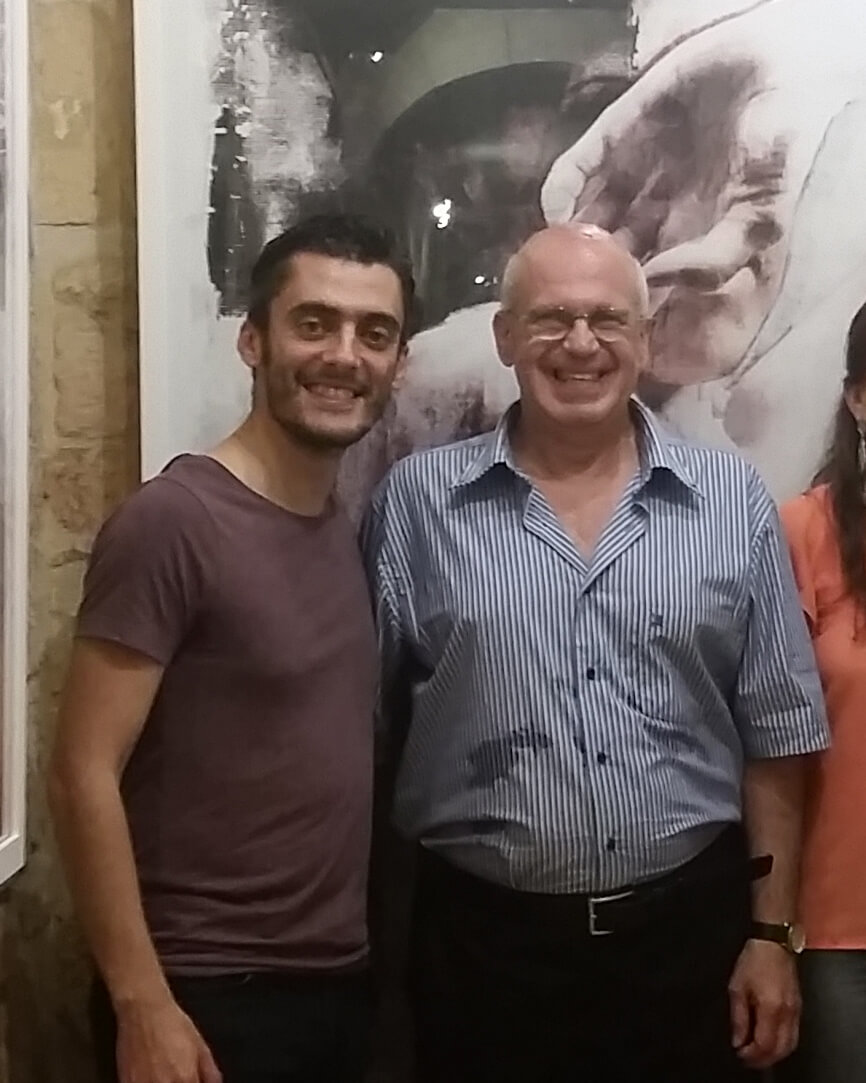
Prof. Ġorġ Mallia’s public legacy was well established: a leading figure in Maltese media and communication, a scholar of graphic narratives, an illustrator, and a cultural contributor whose work spanned decades. Yet for those who knew him personally, his influence lived in conversations, small gestures, and the quiet and consistent ways he supported the people around him. Today I tried to collect some of my memories of him.

I first encountered him as a lecturer at the University of Malta in 2011. Animated and expressive, often standing while he spoke, his hands moved as though the ideas themselves needed as much space to breathe as the words he uttered. I remember his critiques during Presentation Techniques, when we had to present our work in front of a full theatre and then listen to his reviews. His lectures arrived in great waves of information. He would promise to bring comic samples and books, and sure enough, by the next session he would appear carrying a bag full of them for us to pass around. His passion for comics was unmistakable; he treated the medium as a sophisticated form of communication and took genuine pleasure in introducing his students to the work of fellow Maltese artists, such as Joe Farrugia “Spider”.

In July 1, 2015 he visited my exhibition Her Majesty in Valletta after some days earlier he had mistakenly gone to the Archbishop Palace, then rushing to the proper venue and realising it was closed.

Ġorġ didn’t only inhabit his academic and comic worlds; he was deeply engaged with politics and with how the country was shaping itself over the years. Because my own university research touched on political themes, we often found ourselves discussing a range of issues. For a long time he assumed I was a Labourite, and he was visibly cautious or drop a disclaimenr whenever the conversation drifted towards politics. I used to reassure him that I had no allegiance to any party and that he could speak freely, without reservation. Over time, our conversations shifted gradually from the academic to the personal. Ġorġ trusted me with his disappointments, from being removed as Chairman of the National Book Council in 2013 to, later, confiding in June 2019 that he was heartbroken after a very difficult breakup.

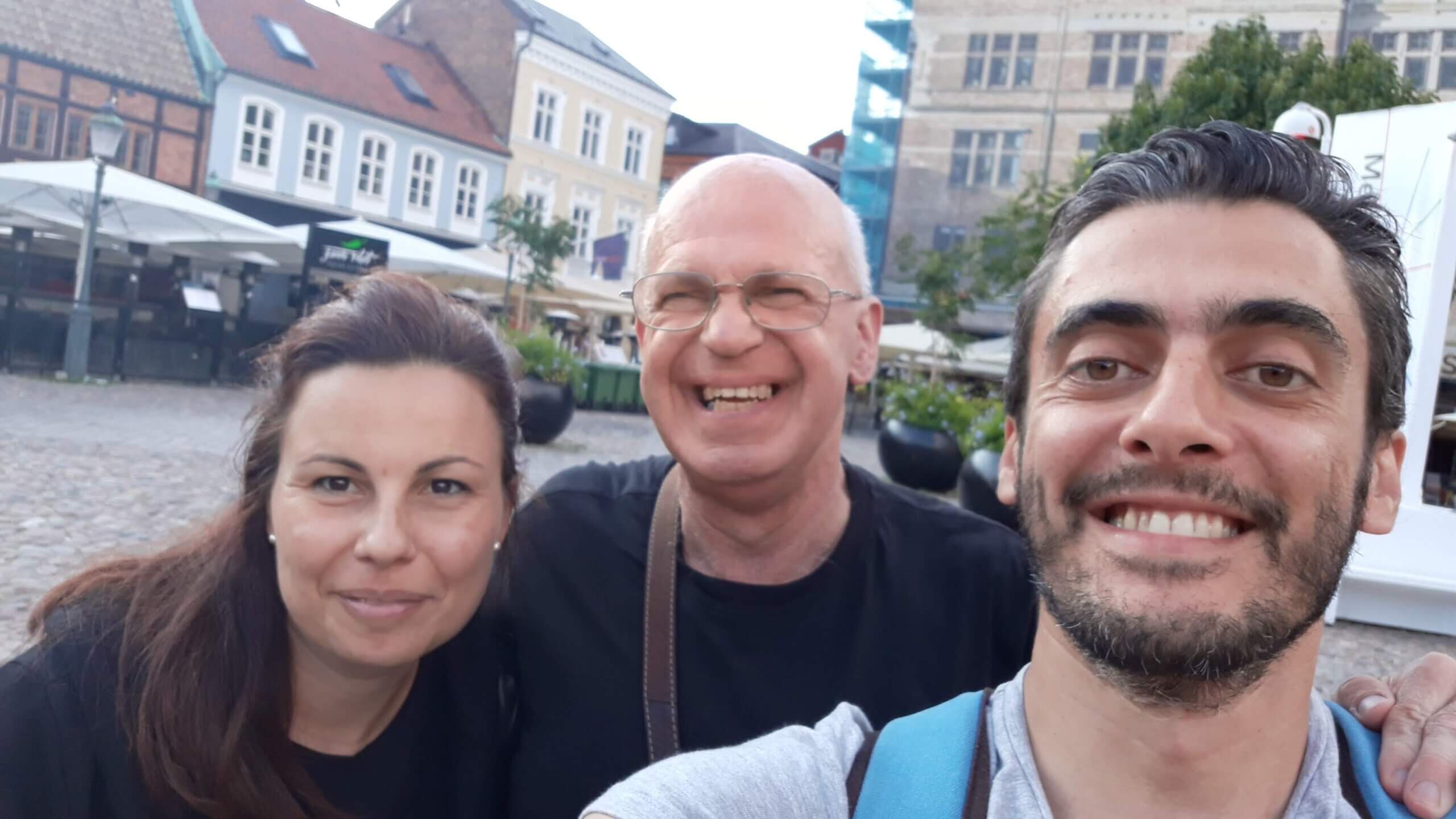
When I travelled to Copenhagen in 2018 and let him know I intended to pop over to Malmö, where he kept a second home, he was genuinely thrilled, and we quickly arranged to meet. Before walking us to his place, he made sure to give us a brief tour of the neighbourhood. Welcoming me and my colleague in such a simple, genuine way revealed his humbleness. In that moment, he made me feel genuinely happy.

Later in 2019, he invited me to a Christmas gathering at his home in Malta. I didn’t go as I was going through a difficult period myself and preferred to stay in. He later told me I would have enjoyed the 12-hour celebration. It remains a small regret that will linger.

There were a few things I was never particularly keen on about him: his obituary portraits, his never‑ending elegies for every visual art exhibition he attended, even the poor ones and the way he, at his age, exposed his sentimental pains on a toxic platform like Facebook. But that was Ġorġ, instinctive, forever praising, and transparent.

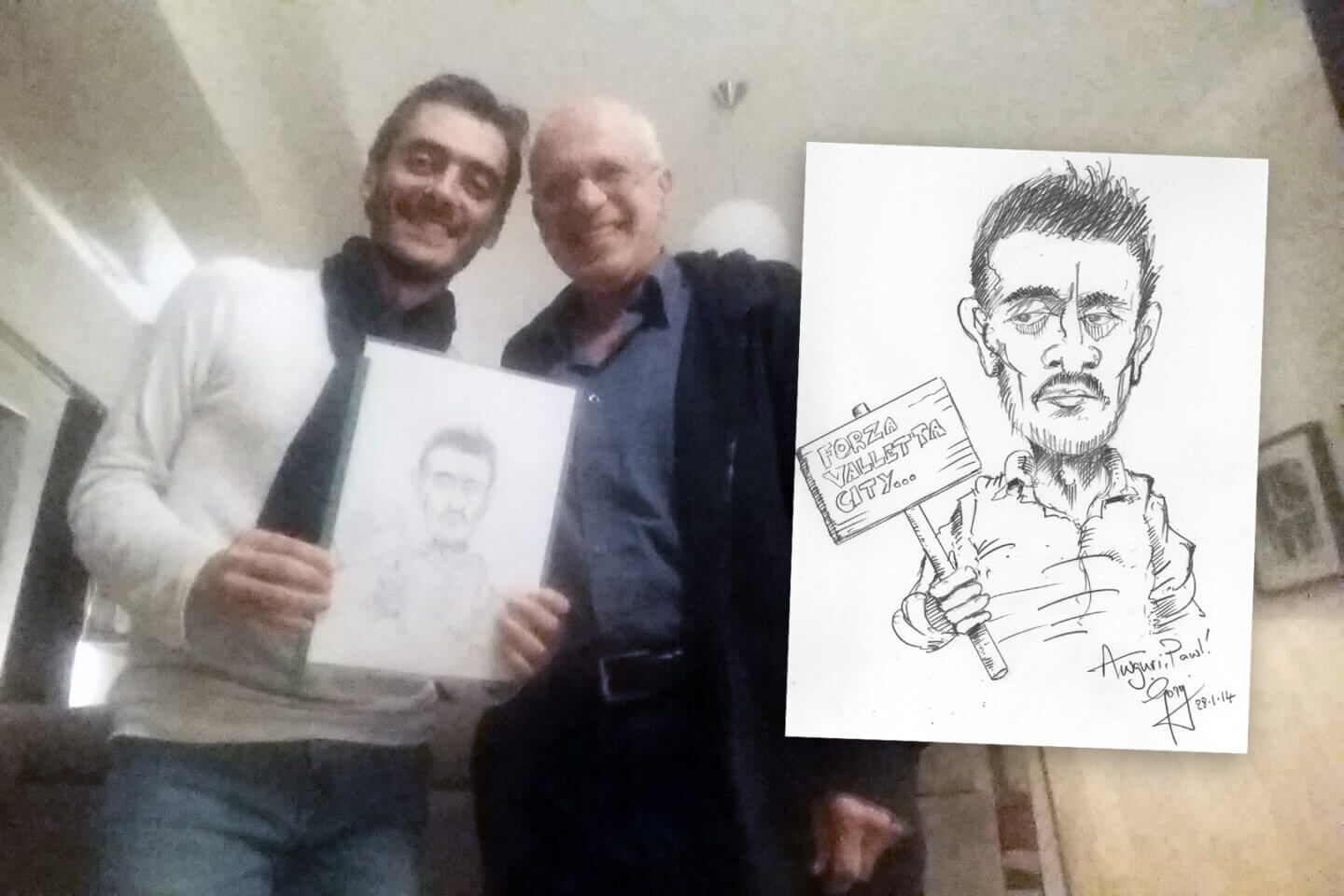
One of my fondest memories began as a joke on Facebook in 2014. He wished me a happy birthday, and I quipped back, “I expected you to draw a caricature of me.” Within minutes, he posted one in reply, later giving me the original drawing at his apartment in Msida. At the time, my mother was beginning to show early symptoms of dementia. When I returned home, I photographed her holding the sketch and sent it to him. His reply was deeply heartfelt; he appreciated the gesture, revealing just how attuned he was to people through his art. Later, he was genuinely surprised when I told him I had framed the piece, insisting, with characteristic modesty, that I shouldn’t have bothered for what was “just a quick scribble”.

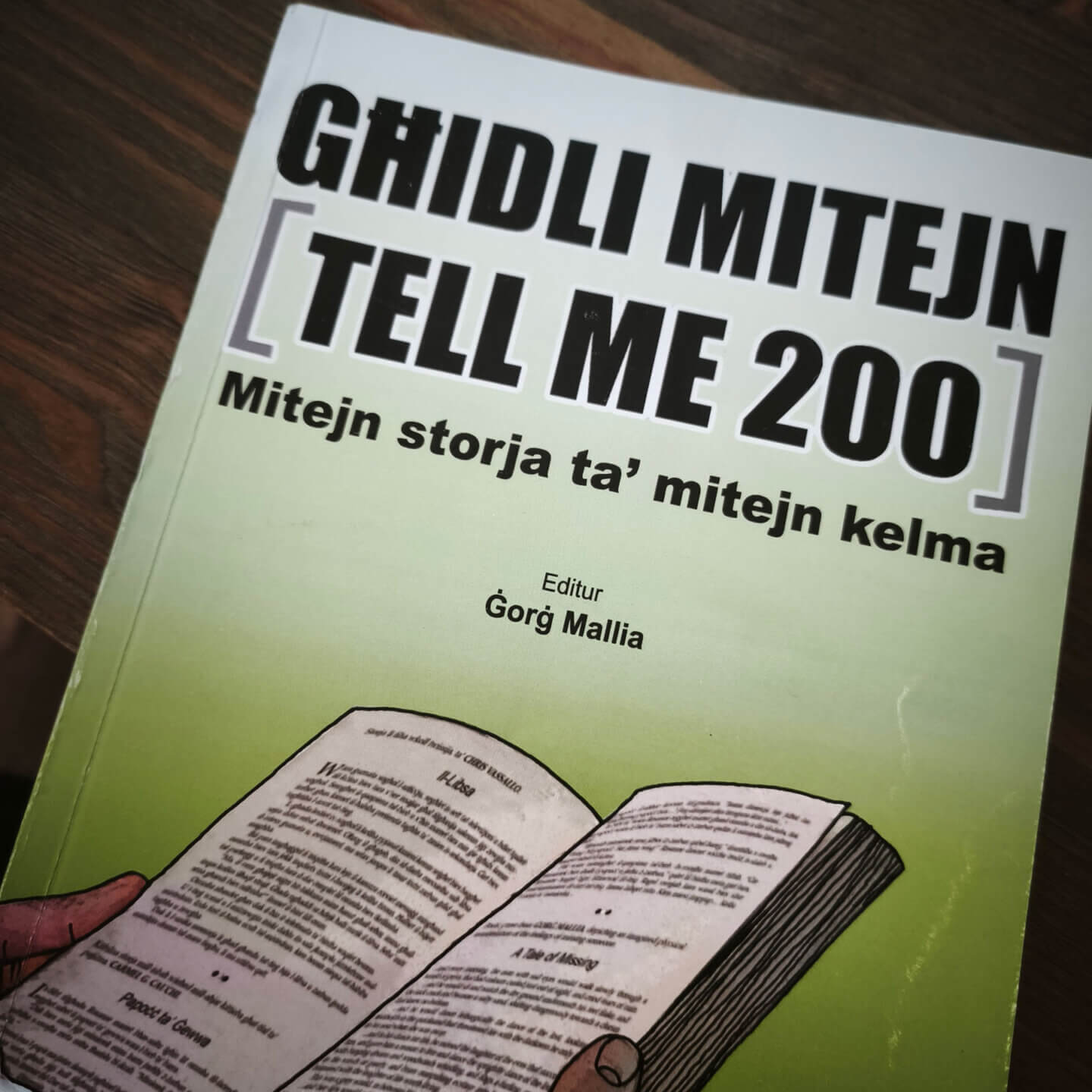
Ġorġ supported my writing in a way no one else ever did. When he curated the collection Għidli Mitejn: Tell Me 200, he chose to publish a few of my 200-word stories. It was one of the very rare times anyone had intentionally published my work, and I remain deeply grateful for it. He genuinely believed in fresh voices, actively looking out for them and making space for them.

His commitment to his students didn’t simply end when a course did. I had once expressed my disappointment over how my Master’s degree was handled, specifically why it got a particular rating, and why no one had bothered to give us direct feedback on the final outcome. Nearly a decade after I completed the degree, he resurfaced out of nowhere with a detailed critique of my thesis report, apologising for the delay. He warned that comments in his review might have come across “a bit harsh”, but he softened the moment with characteristic warmth, reminding me that he himself had marked my work as an A.

He was equally quick to offer practical help when I reached out. Two years ago, when I launched an initiative through my Facebook project Belt Valletta to recognise local residents, I asked if he might help source a few books given his involvement with the University of Malta Press. He replied immediately, telling me to drop by his office where a box was already waiting. When I arrived, he was in a rush, moving quickly between commitments, but he excused himself with his usual gentleness, handed me the box, and simply said, “Pick it up and take it.” It was such a small moment, yet it captured him perfectly: helpful, thoughtful, and entirely without pretension. That was the last time I saw him in person.

Throughout the years, he kept close tabs on my life. He congratulated me on key milestones, including the day I received the keys to my home. He always replied to exhibition invitations even when he couldn’t attend. Out of the blue, he would send me newspaper reviews of my own exhibitions, just in case I missed out on them.

I last heard Ġorġ, two or three days before his passing, on a radio interview. It must have been Radju Malta 1. He was indeed a reference point but the legacy he leaves behind is also built on quieter things: the messages sent, the drawings shared, the conversations held, the encouragement offered, and the friendships nurtured. He was a scholar, but above all, he was a man of great empathy, humour, and initiative. I consider myself remarkably fortunate to have crossed paths with him and to have felt the boundlessly creative energy that his soul emanated.

I salute my friend, Ġorġ’s son and my former colleague Samwel, as well as all of Ġorġ’s family, and encourage them to continue publishing the many works he undoubtedly left behind.

Elections and Transactions

Note: This article was published as an edited opinion piece on Times of Malta.

Watching the recent Times Talk Campaign Watch debate ahead of Malta’s 30 May general election, political analysts Lou Bondì and Michelle Attard Tonna reflected on the current state of Maltese politics as revealed through the electoral campaign itself. Central to their reading was a question that increasingly appears to define modern political culture in Malta: “What’s in it for me?”. That observation captured a deeper transformation that has gradually reshaped Maltese political culture itself.

Campaigns once attempted to present competing visions of society. Today, they resemble exercises in crowd choreography and expectation management. Political promises are distributed like commodities. Many citizens have grown accustomed to the familiar pre-election phone call asking if they “need anything” before casting their ballot, the ultimate transactional call. Voters are no longer encouraged to ask who can govern the country best, but who can best improve their personal position within the system.

I have personally known individuals who spent years condemning the direction the country was taking because their businesses were suffering, only to later abandon those same businesses once they were offered more comfortable and equally, if not more lucrative, roles within public entities. I have heard businessmen privately admit their discomfort while justifying their partisan loyalty because, in their own words, “they have the money and they are throwing work at me.” In another instance, an elderly man refused to criticise the government because promises of medical assistance for his disabled nephew had to be safeguarded at all costs.

These are not isolated contradictions of character but symptoms of a wider system in which political proximity increasingly outvalues human capacity. The state has become the principal guarantor of opportunity, and loyalty has acquired a literal economic value. On closer inspection, this system actively benefits from keeping sections of the population politically dependent. Modest allowances and benefits, small in macroeconomic terms, but deeply significant to a household, are used to cultivate a loyalty rooted in gratitude and fear of loss. Why struggle to build genuine expertise when political alignment is the fastest route to contracts, appointments, or institutional advancement? Political swings in Malta are therefore rarely about conviction; they are about convenience.

One begins to wonder whether the Nationalist Party’s most radical contribution to Maltese democracy would be to temporarily withdraw from the political stage altogether, not as surrender, but as disruption.

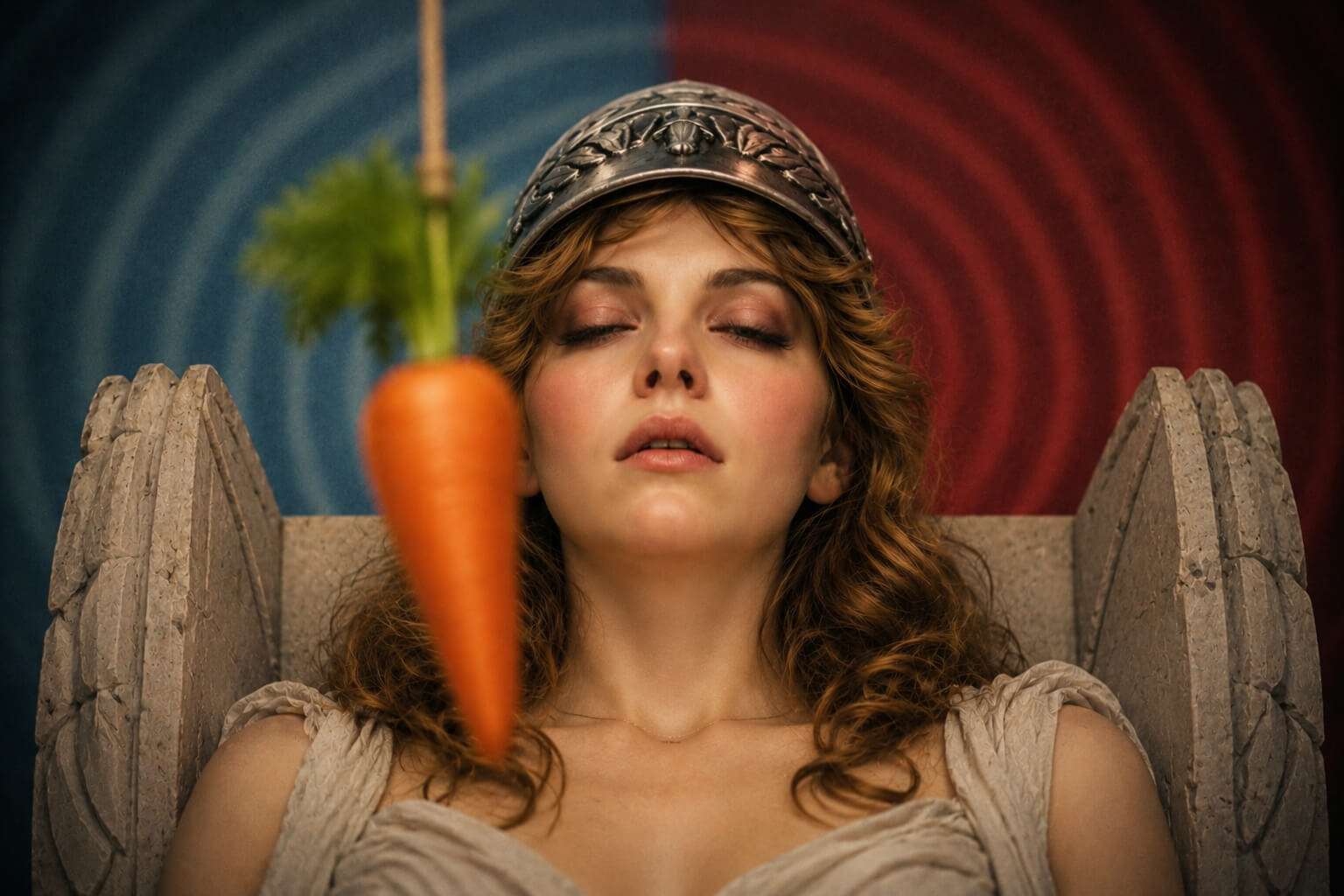
This is why another defeat for the Nationalist Party would carry significance far beyond the immediate electoral result. As Bondì observed, it would extend more than a decade of electoral failure despite successive leadership changes. But at this stage, the opposition does not require another leadership replacement. It demands a direct confrontation with the hypnotic allure of transactional politics itself. The swinging carrot must stop.

One begins to wonder whether the Nationalist Party’s most radical contribution to Maltese democracy would be to temporarily withdraw from the political stage altogether, not as surrender, but as disruption. Malta may need to confront a reality it has avoided for decades: what happens when a nation begins believing that no genuine alternative is necessary?

By removing one side of our rigid, culturally inherited two-party structure, we might finally create the space that Maltese politics desperately lacks: a space for genuine civic activism of the masses, ideological renewal, and movements built around coherent philosophies rather than electoral mechanics.

There was once a period when political parties cultivated intellectual figures who contributed to broader visions of society beyond electoral strategy. Thinkers such as Peter Serracino Inglott and Oliver Friggieri represented an era in which politics were guided with questions of ethics, language, identity and national purpose. Over time, however, that intellectual dimension faded beneath a broader culture shaped increasingly by consumerism. The prosperity our post-war grandparents longed for has, ironically, become our curse.

Today, the two dominant parties resemble rival corporate brands. Campaigns are staged as spectacles of visibility, designed to capture attention rather than shape civic consciousness. Aspiration and access are sold as products, while policy becomes little more than the wrapping paper.

This mentality has inevitably seeped into public institutions and media. Political journalism increasingly frames debate as a ledger of entitlements: Can you guarantee this allowance? How much cash will you provide? Polling, projections, and statistical forecasting dominate coverage, transforming democratic discourse into a marketplace driven by the best paid strategic alienation.

This culture did not emerge overnight but intensified during the political era shaped by Joseph Muscat, when economic growth was elevated into the supreme moral justification of governance itself. Prosperity became not merely a policy objective, but the principal defence against criticism.

… slogans like l-aqwa żmien, l-aqwa fl-Ewropa, best in class, inflate egos of the islanders while quietly widening social gaps.

Within that framework, foreign labour increasingly came to be discussed almost exclusively through the language of utility and economic convenience. Muscat himself famously argued that Malta had effectively reversed its historical colonial dynamic: whereas Maltese people once served their colonisers, today foreigners “iseftrulna” (serve us), carrying out tasks locals no longer wish to perform.

The issue is not migration itself, but the hierarchy of values around the economic model, a system where constant expansion, spectacle, and slogans like l-aqwa żmien, l-aqwa fl-Ewropa, best in class, inflate egos of the islanders while quietly widening social gaps. Even political reconciliation is now framed transactionally. Prime Minister Robert Abela’s recent invitation for those who felt hurt by the government to “reach out” unintentionally revealed how politics is currently understood: as a negotiable relationship between grievance, compensation, and a vote.

When politics is reduced to exchange, citizenship itself degrades. Voters seek advantage rather than representation, loyalty becomes entirely conditional, and democracy devolves into a sophisticated exercise in perception management.

This is why ideas like limiting governments to a strict ten-year maximum are gaining plausibility. Not because they are perfect solutions, but because prolonged continuity risks turning patronage into normality and governance into permanent electoral management.

If Malta is to honour the spirit of its independence, it urgently needs a revival of political imagination: fewer spectacles and transactional promises, and more intellectual courage, civic seriousness and long-term vision. Parties should be judged on the coherence of their ideas not the scale of their giveaways.

Elections should be moments of national reckoning, not marketplaces of expectation or political pop concerts. Democracy is not The X Factor. If Malta is to rediscover what kind of country it wishes to become, it must first disrupt the comfort of transactional politics and confront the stagnation created by entrenched monopolies.

Learning Through Osmosis: A Salute to Laurence Grech

Note: This article was published as an edited opinion piece on Times of Malta.

Having been raised in Valletta, I always longed to work at Allied Newspapers. As a boy I would look up at the white block beside Castille and imagine myself inside it one day. After formative years as an apprentice graphic designer at Scancraft Studios and short spells at BMS Ltd., the Acquis Communautaire Translations Unit and Peak Ogilvy, that dream finally came true. I had originally intended to join Mediamaker but, for some reason, the opportunity at Allied Newspapers presented itself instead. And thank God it did.

Working and living in Valletta was a happy, intense chapter of my life. Allied Newspapers became part of a formative phase that shaped me professionally and introduced me to colleagues who remain friends to this day.

During my two spells there between 2004 and 2014, I encountered Laurence Grech often. To all of us, he was simply Laurence. No titles. No distance. Just a steady, dignified presence, usually advancing at a brisk, unmistakable pace, his footsteps announcing him before he appeared. He carried the newsroom’s memory and its conscience with a smile.

What set Laurence apart was his instinctive understanding of a newspaper’s public duty in a pre social media world. He was determined that no relevant story be overlooked, and he championed cultural initiatives with particular conviction. That sometimes meant pages fuller than designers preferred. We grumbled about crowded layouts, but Laurence saw the larger picture. The paper was a lifeline, a gatekeeper, a public square where voices could be heard. He accepted that responsibility with humility and with resolve.

I remember one night in particular, the Saturday evening when news broke that Pope John Paul II had passed away. The newsroom atmosphere shifted instantly. It was not merely another international story; it was a moment that would mark history. Laurence handled the situation with remarkable composure. Pages were reworked, priorities reassessed, deadlines stretched to their limits, yet somehow, through his steady direction, the Sunday edition was reorganised so that readers would wake to the news properly carried and contextualised in The Sunday Times of Malta. It was masterful crisis management, but more than that, it was a demonstration of what he believed a newspaper owed its readers.

He treated colleagues as equals, regardless of age or rank. To younger staff he was unfailingly respectful, guiding without patronising and correcting without diminishing. He fostered an atmosphere in which everyone felt valued; men and women, senior staff and newcomers alike. It was never performative; it was simply who he was, a gentleman in the truest sense.

Small gestures revealed his character as clearly as his editorial decisions. He would bring seasonal treats to the office. I can still picture the figolla he once shared, softening the edges of deadlines and late Saturday nights. When he was not at his desk in his tiny office, he would pass by our desks and pause to talk about music, exhibitions, politics or whatever creative obsession occupied us at the time. His curiosity was genuine. He cared because he believed such things mattered.

His meticulousness was legendary among page setters. Laurence could detect a missing comma from across the room. His corrections were precise and consistent, never pedantic, always rooted in respect for the reader, for the craft and for the truth. His search for the right word and the most accurate terminology was inspiring in hindsight. At the same time, he was unafraid to be firm when standards slipped. If a contributor fell short, he addressed it directly, always fairly and always with the aim of raising standards rather than lowering spirits. That balance of authority and humanity is rare, and rarer still sustained over decades.

In recent years our exchanges were fewer, but they remained warm. When I invited him to my exhibition Dialogue in Transcendence, his reply was characteristically gracious:

Dear Pawlu, thank you for the invitation. Unfortunately, because of a foot injury I am mostly house bound, so I am afraid I will not be able to attend. However, I sincerely wish you every success with this exhibition — Prosit!

That brief message carried everything I remember about Laurence: courtesy, encouragement, and genuine interest in the work of others.

Laurence helped shape a newsroom culture that some of us still recall as the finest years of their professional lives. He understood that journalism is not merely about information, but about integrity, community and care. He encouraged initiative and gave voice to those who might otherwise have gone unheard.

Just as we mourn the loss of the white building beside Castille, we now mourn Laurence’s passing as a profound loss to his family, to his colleagues and to Maltese journalism. Yet his legacy endures in the standards he set, the people he mentored and the culture he helped build. I consider myself fortunate to have learnt from him through osmosis.

Farewell, Laurence. Today we celebrate you, the dignity you brought to our working days, the clarity you demanded and the kindness you showed to every one of us. In my own small way, I hope to carry a part of that legacy forward.

Rethinking Fatal Drink-Driving Cases in Malta

Picture by Usman Malik on Unsplash

Despite Malta’s ongoing investment in drink-driving awareness campaigns, court rulings continue to classify fatalities caused by such behaviour as “involuntary homicide”. But can a death resulting from a knowingly reckless act still be downplayed as involuntary?

When someone chooses to drive under the influence, fully aware of the risks and the constant reminders from society, can the tragic outcome really be called “involuntary”? In Malta, authorities have spent years and significant public funds on educational campaigns warning about the dangers of drink-driving. We’ve all seen the road safety ads, awareness videos, and signage across our islands. The message is simple and clear: drink-driving is a criminal act that endangers lives.

These messages are no longer optional knowledge they are part of our national consciousness. Anyone who drives in Malta knows that drinking and driving is dangerous. So when someone decides to take that risk, they are not making a mistake in the dark. They are making a conscious decision to ignore everything society has taught them, to place themselves and others in harm’s way.

And when this results in a fatality, is it enough to call it “involuntary homicide”? The legal system must of course rely on clear definitions of intent, negligence, and recklessness. But public discourse, and eventually the law itself, must also evolve to reflect present realities. Today’s sentencing in a drink-driving fatality case once again classed as an involuntary act, raises important questions. If someone knows the risks yet proceeds regardless, how can the outcome be labelled truly unintended?

Such cases don’t always fall neatly into the categories of voluntary or involuntary homicide. Instead, courts often recognise an intermediate category: reckless homicide or gross negligence manslaughter. These terms apply when a person does not necessarily intend to kill, but is fully aware (or ought to be) of the high risk their actions pose to others and proceeds anyway. The behaviour may not be driven by malice, but it reflects such a disregard for human life that the law treats it as a serious and punishable offence.

Driving under the influence is a textbook case of this kind of recklessness. The decision to drink and drive in 2025 is no longer made in ignorance. It is made in full view of awareness campaigns, tragic statistics, and readily available alternatives. That decision is deliberate and when it results in death, the law should classify it accordingly.

Even if Malta’s legal system already differentiates between levels of culpability within the umbrella of “involuntary homicide” such as through sentencing variations or sub-classifications, the way these cases are publicly communicated needs urgent revision. By continuing to label such acts as “involuntary”, the system risks downplaying the very real moral and legal culpability involved. Malta should consider introducing clearer legal distinctions such as a charge of reckless homicide that better capture the conscious, dangerous choices behind these fatal outcomes.

This is not simply a matter of semantics. Language shapes culture. If we continue to soften the terminology around road deaths caused by reckless driving, we contribute to a social environment where accountability is diluted. Are we protecting lives, or the feelings of those who disregard them?

Behind every traffic fatality is a life that didn’t get to continue and the grief left behind is not accidental. It’s a consequence of deliberate behaviour. Justice must speak truthfully. And perhaps, in doing so, it can serve a preventative function too. Law is not only a matter of punishment. It is a mirror to our cultural values. Stronger legal definitions and actions can help instill a deeper sense of personal responsibility in Maltese society.

The Awakening of the Soul: Beyond the Right to Die

Note: This article was published as an edited opinion piece on Times of Malta

As Malta discusses the possible legalisation of euthanasia, the national conversation often narrows quickly to slogans: dignity, choice, suffering, and the right to die. These are important words. But are they enough? Do they truly capture the weight, the mystery, the transcendence that death represents in a human life?

I have been a Franco Battiato fan for a number of years. His lucid, poetic meditations on death, both in interviews and in his music, have always moved me. They led me to seek out some of the sources that shaped his thinking, including In Search of the Miraculous by P. D. Ouspensky, a book that chronicles the teachings of the mystic George Ivanovich Gurdjieff. Although it was written in the early twentieth century and speaks in a language some might find arcane, the book was a major inspiration for the Sicilian maestro. Gurdjieff was concerned with one thing above all: awakening. Learning to live and die with presence, not passivity. This could offer an unexpectedly timely lens for Malta’s moral crossroads, as we confront the complex ethical terrain surrounding the possible introduction of euthanasia.

Gurdjieff’s central claim was startling: that most human beings live in a state of waking sleep. We are ruled by habits, fears, and fragmented identities. We believe we are free, that we choose, but in truth, we are often driven by unseen forces: mechanical reactions, emotional pain, and cultural scripts we never questioned.

This matters profoundly when discussing euthanasia. In our public conversations, we tend to assume that a person requesting euthanasia is doing so out of rational, autonomous will. But what if that will is fractured? What if the ‘I’ making that request today is not the same ‘I’ that found beauty in life a few weeks ago? What if they are simply exhausted, not just physically but existentially, and no one has helped them interpret their suffering in a deeper way?

I have encountered such exhaustion firsthand during my long hours at St Vincent de Paul, the home for the elderly. One resident once confided in me, without hesitation, that if a doctor were to come and offer euthanasia, they would immediately accept. “I’m tired of this world”, they said, not with drama but with quiet resignation. It was not just about physical decline. It was about feeling removed from community, from agency, from meaning. For this person, life as it had been known seemed to have already ended the moment they were relocated and made to feel like a burden. In such a context, is this truly a free choice? Or is it a silent protest, against invisibility, against emotional exile, against a society that no longer knows how to hold its elderly with dignity, presence, and love?

Gurdjieff’s teachings push us to examine what kind of consciousness we bring to life and death alike. He argued that true freedom only begins when we start remembering ourselves, when we awaken to the reality of our situation, our nature, our impermanence. From this perspective, death is not just a biological endpoint. It is a portal, a moment of truth, perhaps the final invitation to be present, to reconcile with ourselves and with what lies beyond. This mirrors, in some way, Jesus’ teaching that “the Kingdom of God is within you” (Luke 17:21), pointing to an inner dimension of spiritual awakening that transcends ritual.

Another passage in this context is Jesus’ radical instruction that his followers must “hate” their father, mother, spouse, children, siblings, and even their own life to be his disciples (Luke 14:26). This is not a call to emotional rejection, but a provocative teaching about detachment. It speaks to the need for liberation from the attachments that bind us to identity, comfort, and ego. Not liberation from love, but from clinging. It is about choosing a deeper identity, rooted in what is eternal or divine, over societal roles, tribal belonging, or inherited scripts. In the context of death, it reminds us that spiritual freedom often begins with the courageous act of letting go.

This is not an argument against euthanasia as such. It is an appeal to resist simplifying the conversation. Suffering is real, and compassion is essential. But so is the sacredness of dying, the way it can sometimes transmute pain into meaning, loneliness into connection, fear into surrender. That kind of death does not always happen on its own. It takes inner work, accompaniment, and cultural maturity.

Malta must ask itself hard questions. Are we offering people the tools: spiritual, emotional, and communal, to meet death consciously? Or are we asking them to choose between unbearable pain and bureaucratic mercy? Are we cultivating a society that sees the final chapter of life as a space for transformation? Or are we writing it off as a medical failure?

We must also ask what it means to die freely. If the one requesting euthanasia is abandoned, under-resourced, ashamed of being a burden, or living in a society that fears ageing and illness, is that freedom? Or is it despair dressed in legal language?

There is a danger too in seeing euthanasia as a technical solution to a human problem. The Gurdjieff work insists that life is not mechanical. It requires attention, intention, and inner struggle. Euthanasia risks becoming another clinical response to the messy business of dying, bypassing the existential encounter that can arise at the threshold. When we reduce the dying process to symptoms and metrics, we risk falling into clinical reductionism, the flattening of a profoundly human and spiritual experience into merely medical categories.

There is also a deeper mystery we often overlook: we can never truly know the state of consciousness of another person’s soul, even when the body appears unresponsive or in a vegetative state. To presume that all awareness is absent is to reduce the human being to biology alone. But if there remains some quiet, hidden flame of presence, unseen, unmeasurable, then the choice to end a life carries even greater moral and spiritual weight.

And yet, I believe this conversation could be Malta’s moment. Not to divide into ideological tribes, but to pause and reflect on what we owe to one another in life’s most intimate passage. We owe more than palliative care. We owe meaning. We owe presence. We owe a language that makes space for sorrow, for slowness, for mystery. We owe spiritual resources beyond religion.

Gurdjieff spoke of “intentional suffering”, the kind that awakens rather than diminishes us. That does not mean we should glorify pain or deny mercy. It means we should avoid choosing comfort at the expense of consciousness. Death is not just something to get through. It is something to be met.

Battiato captured this in his final song, Torneremo Ancora, where he sang of the eternal return of the soul. To journalist Vincenzo Mollica he once said:

“We are all spiritual beings. We are on a path towards liberation. Until we are free, we will return again, many times, to this earthly life. Existence is cyclical and it repeats until the soul is completely free from the disturbing emotions of the ego which holds it captive. We are slaves to our emotions, which dominate us. Liberation, on the other hand, can have no ties.”

This is a moment to speak not only for those in pain, but for those who see death as a passage, not an error; as mystery, not only as problem. If that speaks to you, let your voice be part of the conversation. What would it mean for Malta to explore euthanasia not as an end in itself, but as a mirror reflecting how we accompany, how we see the other, how we awaken to our own mortality? That kind of discussion is harder, slower, and more miraculous.

“Le nostre anime / cercano altri corpi / in altri mondi / dove non c’è dolore / ma solamente / pace / e amore / amore.” — Franco Battiato

Whose City is it Anyway?

Note: This article was published as an edited opion piece on Times of Malta

Two Vallettas exist today. One gleams in glossy magazines and sponsored features on The Mirror and Daily Express (who’s footing the bill for those, by the way?). The other lingers in memory, haunted by those who once called these streets home, now captured only in Paul Caruana’s watercolours. Boutique hotels outnumber locals. Cafés spill over with day-trippers. Benches in Pjazza Reġina creak under tourists, while nearby flats that once pulsed with life now echo only the sound of rolling suitcases. Valletta has become a spectacle. And for those who remain, or who left but still care, it has become a soundscape of grief.

Urban renewal is not inherently destructive. Cities grow, adapt, and regenerate. But Valletta’s transformation was never shaped through dialogue. It was a strategy of extraction. Property speculation soared. Tourism spiralled unchecked. Commercial interests replaced meaningful community life. The cost of long-term residence became prohibitive. Even the most rooted families eventually gave in, worn down by a system that rewards cashing out over staying put.

Today, “Beltin” resonates less with a living community and more with Valletta Football Club supporters, scattered across the islands. This was especially evident in the club’s recent celebrations. As anthropologist Jon Mitchell observed in his 2006 paper Six Trophies and a Funeral, “Nostalgia for the city offers the departed and the distantly related the chance to experience authenticity; such that for many, the performance of celebration becomes the real Valletta.” Very few are able to notice this difference.

And that’s the point. Valletta’s so-called renewal was never about celebrating community. It was about erasing it and replacing it with wealthier consumers. This isn’t just a cultural loss. It’s a rupture of trust, of shared values, of belonging. In response to one of my 2024 Facebook posts, the Site Manager for Valletta as a UNESCO World Heritage Site, remarked: “Valletta without Beltin does not exist.” I would go further. Without its people, Valletta becomes a façade. That is precisely what our government has turned it into: a backdrop for selling the nation and parading bloated economic pride.

The voices of those still living within the walls are rarely heard unless they hold political influence. The rest speak with resignation. They talk of vanishing services, missing neighbours, and memories blurred by loud music thumping past 1 a.m. Streets they no longer recognise. Every month brings the loss of more familiar faces through death, displacement, or sale. Outsiders with resources buy families out, convert homes into sterile rentals, and call it progress. Those who remain face a cruel dilemma: sell now, or be pushed out later.

The city’s social memory is being flattened. Festas are streamed, advertised, and aestheticised for outsiders. Few locals still participate. The grocer who once trusted you to “pay later” is now a restaurant. The toy shop is hotel storage. The bookshop is a bar, its doorway vivid with morning vomit. Children no longer play in the streets, not for lack of space, but for lack of children.

In early 2024, I launched a public petition calling for the Evans Building, a publicly owned site, to be developed into a community centre. The proposal addressed real needs: services for the elderly, childcare, youth programmes, creative spaces. A space inspired by successful models I’d seen elsewhere in Europe: vibrant, accessible, rooted in care and guess what? Profitable! A place that could encourage young families to plan a future in Valletta, rather than see it as a city to leave behind. Following a good turnout of signatories, I submitted the petition to Parliament. Months passed without a formal response. Ministries deflected. The Valletta Local Council stays silent. Meanwhile, the tender for a 65-year lease of the Evans Building to become a luxury hotel remains under appeal. There has been no pledge to consult with residents, or to articulate a vision that includes them.

The UNESCO Site Manager claimed that matters related to nuisances affecting residential life fell outside his remit. To his credit, he expressed personal frustration and a willingness to listen. And I take this opportunity to gently notify him that a Valletta activist is still chasing him for a coffee, as I write. He acknowledged that his role lacks enforcement power and rightly emphasised the need for stronger residents’ associations. This kind of recognition matters. But it also reveals something deeper: goodwill is not enough. Roles of such responsibility should not be confined to desks. The Cultural Ministry and cultural institutions must go beyond programming art events or doling out funding schemes. They need active engagement, a deep understanding of the community’s fatigue, and an urgency for action. This is culture! Valletta won’t be saved by courteous frustration. It needs coordination, shared resolve, and rising public pressure. We must demand focused and genuine care.

I believe this silence and staged consultation is not a by-product. It’s a tactic. If the community fails to speak loudly enough, then another precious site will quietly slip into private hands. One more space gone. One fewer place for children to grow, neighbours to meet, elders to age in dignity. One less patch of thriving culture.

And the implications stretch further. In a pre-election interview published on 8 June 2024, the former Valletta Mayor openly supported developing a hotel on the Evans Building site. His primary concern wasn’t the loss of public heritage, but parking. He proposed shrinking the nearby primary school to make space for a three-storey underground paid car park, shared with the hotel, the smaller school, and an elderly care facility. With the Evans Building next door, it would surprise no one if the school were eventually absorbed into private development.

The current Mayor has yet to side with residents. Today, holding this office seems less about public service and more about personal branding, with events posted to private accounts instead of official platforms, all in an effort to gain more followers. The role has become an audition, a stepping stone to move from one government position to the next, with eyes set on the ultimate prize of ministerial glory.

Some tell me Valletta is already lost. “There’s no going back.” I empathise with that feeling. The change has been swift, brutal, and often irreversible. It’s hard to hope when applause goes not to those defending people’s right to remain, but to others chasing likes by organising tombolas and village outings. And yet, the pain we feel is proof the city still matters. Valletta is not gone. It is wounded. And wounds can heal if we choose to care for them together.

The Evans Building petition hasn’t brought reform – not yet. But it revealed something vital: the will to imagine otherwise. To believe in a Valletta not curated, but lived. A city where community isn’t a relic for tourists but an everyday reality. We can still walk streets where care replaces consumption. Where there’s space to pause, to talk, to watch children play. Where Pampalun’s legacy, and that of so many others, is not just remembered but continued.

We can’t recover everything that’s been lost. But we must insist on being present. People ask what can be done when power feels distant and profit always wins. The truth is, change never comes by hiding. Ordinary people may lack capital or clout, but we have numbers, memory, and voice. We can comment on posts, share content, come together and contribute ideas. We can attend Local Council and activists meetings, demand transparency, and back those who stand with residents. Even small acts of defiance inspire better decisions behind closed doors. Join us few active citizens, in demanding a city plan rooted in life, not leisure. Let’s hold our leaders accountable and insist they see Valletta not as a showpiece, but as a place of belonging. Once people stop believing Valletta belongs to them, it becomes that much easier for others to claim it. The question is not whether Valletta can be saved, but whether we still care enough to show up and say: this is not just a postcard. This is our home. In the end, between spectacle and survival, Valletta will only thrive if all of us Beltin answer: it is ours.

Why Women?

Reflections on the feminine in Pawlu Mizzi’s Art

Through art, we attempt to understand the world and our place within it. In my work, the female figure takes centre stage in this introspective exploration. My subjects often serve as vessels of transformation and resilience as they embody myth and memory, longing and loss, beauty and corruption. Drawing from personal relationships, my work extends beyond autobiography, tapping into broader analytical narratives and suggesting a dynamic force that disrupts traditional structures of perception. They represent the intersection of idealisation and disillusionment, personal experience, and my quest for universal truth and purpose.

On this Woman’s Day, I reflect on why the feminine remains at the core of my artistic exploration. Women not as muses, but as forces of nature, subjects of my history, and architects of my spiritual journey. My work is a space where I reclaim stories, distort and reshape them, and ask new questions about identity, purpose, resilience and resistance. It moves away from the ideological constraints of patriarchal culture, where women have long been reduced to mere symbols of male imagination and control.

In my world, the feminine embodies a spectrum of roles: mother, lover, muse, warrior, call them icons of promise and disillusionment, each carrying its own narratives and symbolism. These archetypes are not confined to women alone but represent universal aspects of humanity that transcend gender. Psychoanalyst Massimo Recalcati, in Le mani della madre, explores motherhood beyond biological determinism, proposing that the maternal function is a symbolic space that can be occupied by anyone, regardless of gender. He argues that it is not a biological trait but a relational and affective role, one even a man can embody. Recalcati’s insights suggest that qualities traditionally associated with the feminine like nurturing, empathy and creativity, are accessible to all. This perspective heightens my awareness of understanding the feminine not as the woman, but as an intrinsic element within the human condition, and therefore also my own, allowing for a wider exploration in my art.

Engaging with the feminine in my work has evolved into an exercise in self-analysis, a dialogue with the deeper facets of my psyche. The women I portray are not merely external figures, but reflections of my inner world, embodying vulnerability, strength, desire, exaltation, and survival. This process has allowed me to develop my art as a means of exploring the tension between the earthly and the transcendent, between what is visible and what remains hidden.

Throughout history, the female form has been shaped by expectations, reverence, and restriction, transforming it into a contested space. In contrast, my works offer new narratives that challenge these limitations. The women in my art are not passive subjects; they resist, transform, and assert themselves in unexpected ways, reflecting both personal and societal contradictions. They embody myth yet shatter it. The women I depict are not objects to be observed; they engage, watching back.

Celebrated theft of digital content

In today’s digital world, content holds both creative and financial value. However, rather than receiving the respect it deserves, creative content is often stolen by platforms that market themselves as news hubs, profiting from it without providing any compensation or credit to the original author. This content frequently originates from ordinary individuals who share an episode or thought on a personal initiative. While content may be shared in a public space, this does not mean it is devoid of copyright considerations.

It is crucial to distinguish between theft and sharing. When content is distributed fairly meaning through a native share that maintains a direct link to the original source, it can offer a return to the creative author by increasing their exposure and attracting new audiences to their platforms. However, when platforms or individuals republish someone else’s work, present it as their own, and remove the link to the original content, this constitutes intellectual and creative property theft. This methodology has become increasingly common among platforms that brand themselves as news agencies, routinely stealing third-party content and publishing it as-is on their sites. The more reactions the content generates, the more these platforms can monetise.

It remains a mystery how so many people allow these platforms to use their work, some even celebrating the fact that their content has been “featured” on a popular site, without receiving any compensation. These platforms generate significant profits through advertisements that rely on the volume of hits and views on their published content, including stolen material. Meanwhile, the original sources are left empty-handed.

This is not only unfair but also fosters a culture in which digital content is seen as freely available to everyone, when in reality, every piece of content requires time, talent, and effort to be created and communicated. It is time for a serious discussion on how to put an end to this exploitation and ensure that all creators of original content receive what they rightfully deserve, both in credit and fair compensation.

Please note that if someone steals your content, you can file a copyright claim with the platform or take legal action.


Iċċelebrat is-serq ta’ kontenut diġitali

Fid-dinja diġitali tal-lum, il-kontenut huwa valur, kreattiv kif ukoll finanzjarju. Madankollu, ħafna drabi, minflok ma jingħata r-rispett li jistħoqqlu, il-kontenut kreattiv jispiċċa jiġi misruq minn pjattaformi li jbiegħu lilhom infushom bħala kamra tal-aħbarijiet li jikkapitalizzaw fuqu mingħajr ma jagħtu kumpens jew kreditu lill-awtur oriġinali. Dan il-kontenut ħafna drabi jkun xogħol ta’ nies komuni li jaqsmu episodju jew xi ħsieb fuq inizjattiva personali. Għalkemm maqsum fi spazju pubbliku ma jfissirx li dan il-kontenut ma hemmx drittijiet tal-awtur fuqu.

Huwa importanti nagħmlu distinzjoni bejn serq u “sharing”. Meta kontenut jiġi mqassam b’mod ġust – jiġifieri permezz ta’ share li żżomm ħolqa diretta mas-sors oriġinali – dan jista’ joffri ritorn lill-awtur kreattiv billi jżid l-espożizzjoni tiegħu u jattira udjenzi ġodda lejn il-pjattaformi tiegħu. Iżda meta pjattaformi jew individwi jippubblikaw xogħol ta’ ħaddieħor mill-ġdid, jippreżentawh bħala tagħhom u jeliminaw il-ħolqa lejn il-kontenut oriġinali, din hija forma ta’ serq ta’ proprjetà intelletwali u kreattiva. Din il-metodoloġija saret popolari ħafna ma’ pjattaformi li jippreżentaw ruħhom bħala kmamar tal-aħbarijet, li ta kuljum jisirqu kontenut ta’ terzi u jippubblikawh tale kwale fis-siti tagħhom. Aktar ma l-kontenut jiġġeneralhom reazzjonijiet, aktar ikunu jistgħu jimmonetizzaw.

Huwa misteru kif ħafna nies jippermettu lil dawn il-pjattaformi jużaw xogħolhom, anzi, f’xi każijiet, saħansitra jifirħu li x-xogħol tagħhom ġie “rilevat” minn xi sit popolari, mingħajr ma jirċievu kumpens lura. Dawn il-pjattaformi jagħmlu profitti kbar permezz ta’ riklami li jaslu għandhom sforz l-ammont ta’ hits u views fuq kontenut inkluż dak misruq li jippubblikaw. Sadattnt imma, is-sorsi oriġinali jitħallew b’idejhom vojta.

Dan mhux biss inġust, imma joħloq kultura fejn ix-xogħol fuq mezzi diġitali jitqies bħala xi ħaġa disponibbli b’xejn għal kulħadd, meta fil-fatt, kull biċċa kontenut teħtieġ ħin, talent u sforz biex tinħoloq u tiġi kkomunikata. Nixtieq li nibdew diskussjoni serja sabiex dan l-abbuż jieqaf u kull min jiġġenera kontenut oriġinali jiġi mogħti dak li ħaqqu – kemm f’kreditu kif ukoll f’kumpensi xierqa.

Jekk xi ħadd jisraq il-kontenut tiegħek, tista’ tressaq talba ta’ copyright mal-pjattaforma jew tieħu azzjoni legali.

Media ethics

Photo by why kei on Unsplash

Yesterday and this morning, I caught the brief news segments on 89.7 Bay while driving. I found it somewhat irritating to hear news, including yesterday’s tragic reports of lives lost in the Middle East, delivered in such a fleeting manner, and set against an incongruous backdrop of upbeat music. It felt as if these tragic events were a minor part of the schedule, diminishing their gravity altogether.

When human tragedies are presented to listeners like any other commercial product, we risk fostering a culture where everything is seen as consumable, frivolous, and lacking real importance. In this context, war and other significant events become mere content to fill airtime—hastily prepared and often researched reluctantly by editors just to meet scheduling obligations. It would be prudent to remind editors of their social responsibility, not only in choosing which news stories to broadcast, but also in considering the tone and style in which they do so.

These seemingly small details have a significant impact on society, often without us even realising it. Gradually, we are cultivating a culture where everything passes unnoticed, everything is consumed, and nothing is treated with the seriousness it deserves. This is why media outlets must remain sensitive to the direct or indirect narratives they are transmitting to their audience.

Journalistic ethics need to be revisited, taught, and properly enforced. I sincerely hope that the Malta Broadcasting Authority will take appropriate action across all media outlets.


L-etika tal-midja

Ilbieraħ u dalgħodu inzertajt l-aħbarijiet fil-qosor tal-89.7 Bay waqt li kont qed insuq. Bqajt kemmxejn irritat nisma’ aħbarijiet, inkluż dawk traġiċi bħal tal-bieraħ fejn ammont ta’ nies inqatlu fil-Lvant Nofsani, jitwasslu bi stil maħrub u fuq sfond ta’ ritmu mużikali kemmxejn ferrieħi… qisu mument mhux daqstant importanti fl-iskeda u fuq kollox, qisu xejn mhu xejn…

Naħseb li meta t-traġedji umani inwassluhom lis-semmiegħa bħal kwalunkwe prodott kummerċjali, inkunu qed ninstigaw kultura fejn kollox huwa konsumibbli, frivolu u mhux wisq rilevanti. F’dan il-kuntest, il-gwerra u stejjer ta’ rilevanza oħrajn, isiru biss materjal sabiex jimtela’ il-ħin, xogħol sfurzat u żgur mhux riċerkat indipendentament, li l-edituri jippreparaw kontra qalbhom biex jaqqdu l-obbligi tal-iskeda. Ikun xieraq li l-edituri jiġu mfakkra dwar ir-responsabbiltà soċjali li għandhom meta jagħżlu x’aħbarijiet jaqsmu mas-semmiegħ, u b’liema stil jagħmlu dan.

Dawn id-dettalji iħallu impatt kbir fuq is-soċjetà mingħajr lanqas biss nindunaw; bil-mod il-mod inkunu qed inrawwmu kultura fejn kollox jgħaddi, kollox jikkonsma ruħu u xejn ma huwa serju. Huwa għalhekk li entitajiet medjatiċi għandhom ikunu sensittivi għal kull forma ta’ narrativa diretta jew indiretta li jitrasmettu lis-semmiegħa.

L-etika ġurnalistika għandha tiġi riveduta, imgħallma u implimentata mill-ġdid.